On October 7, 2026, New Delhi became the epicenter of intense political confrontation as a major INDIA bloc protest resulted in the detention of top opposition leaders, including Rahul Gandhi and Priyanka Gandhi Vadra. The demonstration was organized to demand the immediate resignation of Chief Election Commissioner Gyanesh Kumar over controversial voter-related allegations. The political showdown escalated rapidly after the Election Commission of India refused to meet opposition representatives at the Parliament complex.
Key Takeaways
- Leader of Opposition Rahul Gandhi and Priyanka Gandhi Vadra were detained by Delhi Police during a march.
- The protest was triggered by the Election Commission’s refusal to meet opposition MPs inside Parliament, citing protocol.
- Opposition parties are demanding the resignation of Chief Election Commissioner Gyanesh Kumar over the “SIR row.”
- Police blocked the march near Jantar Mantar and subsequently booked several opposition leaders.
The Spark: Election Commission’s Protocol Refusal
The immediate trigger for the INDIA bloc protest on October 7, 2026, was a sharp disagreement over meeting protocols between opposition members of Parliament and the Election Commission of India (ECI). A delegation of opposition MPs had sought an urgent audience with the commission within the Parliament complex to present their grievances. However, the ECI declined to hold the meeting there, citing established institutional protocols.
According to commission officials, the poll body retains the sole authority to decide whom it hears and where such meetings take place. This refusal was viewed by the opposition as a deliberate attempt to avoid accountability. The decision to decline the meeting inside Parliament quickly transformed a planned representation into an active, large-scale street demonstration.
The Escalation of the INDIA bloc protest in New Delhi
Following the ECI’s refusal, senior leaders from various opposition parties gathered to launch a flash march from Parliament toward the Election Commission office. The INDIA bloc protest saw participation from a wide array of members of Parliament, who marched shoulder-to-shoulder, carrying signs and chanting slogans against the electoral watchdog. The primary objective of the march was to register a direct protest against Chief Election Commissioner Gyanesh Kumar.
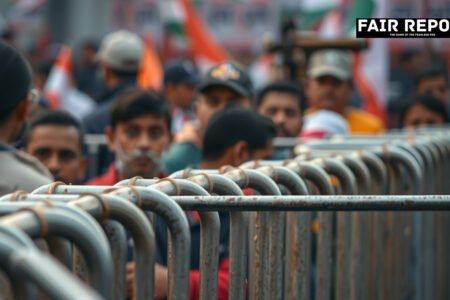
As the marchers progressed toward Jantar Mantar, they were met with a massive deployment of Delhi Police personnel. Security forces had set up multiple layers of iron barricades to prevent the protesters from reaching the highly sensitive ECI headquarters. Despite attempts by the leaders to negotiate passage, the police blocked the march, leading to physical standoffs between security personnel and demonstrators.
Detention of Rahul Gandhi and Priyanka Gandhi
With the march halted by police barricades near Jantar Mantar, the situation escalated. Security forces moved in to disperse the crowd and detain the key figures leading the demonstration. Leader of the Opposition Rahul Gandhi and senior Congress leader Priyanka Gandhi Vadra were physically bundled into police vehicles alongside several other senior INDIA bloc MPs during the confrontation.
The detentions did not immediately quiet the crowd, as remaining supporters continued to protest against the police action. The detained leaders were taken to local police stations, where they were held for several hours. This swift action by the Delhi Police highlighted the government’s stance on maintaining public order in the highly secure central Delhi district, but it also drew sharp criticism from opposition allies who accused the administration of using force to suppress democratic dissent.
The Core Grievance: The SIR Row and Gyanesh Kumar
At the heart of the INDIA bloc protest lies the controversial “SIR row,” which involves serious allegations of voter discrepancies and administrative misconduct. Opposition parties have accused the Election Commission, under the leadership of Chief Election Commissioner Gyanesh Kumar, of failing to address critical flaws in voter registration and electoral roll management.
The opposition argues that these unresolved issues compromise the integrity of democratic elections in India. By demanding the resignation of Gyanesh Kumar, the INDIA bloc aims to pressure the government into implementing comprehensive electoral reforms and establishing a more transparent oversight mechanism. The ECI, however, has consistently defended its processes, maintaining that its operations are entirely impartial and conducted in strict accordance with constitutional mandates.
Legal Aftermath and the Next Steps
The fallout from the march extended beyond temporary detentions. Following the day’s events, Delhi Police registered formal cases against Rahul Gandhi, Priyanka Gandhi, and several other prominent MPs involved in the demonstration. The decision to book the leaders has further intensified the political climate, with opposition strategists already planning their next legal and political moves.
Rather than backing down, the alliance has indicated that the momentum gained from the INDIA bloc protest is only the beginning of a sustained national campaign. Leaders from various regional parties have expressed solidarity with those detained, suggesting that the issue will be raised aggressively in the upcoming sessions of Parliament. The legal challenges arising from the bookings are expected to be contested vigorously in court.
| Issue | INDIA Bloc Position | Election Commission / Government Position |
|---|---|---|
| Meeting Venue | Demanded meeting inside the Parliament complex for immediate accountability. | Declined citing protocol, asserting the ECI decides meeting locations. |
| CEC’s Role | Demands resignation of Gyanesh Kumar over alleged voter discrepancies. | Defends the impartiality and constitutional integrity of the commission. |
| Protest Legality | Asserts the democratic right to march and voice institutional grievances. | Enforced security restrictions and booked leaders for violating public order. |
Institutional Integrity and Future Outlook
The confrontation in New Delhi underscores a deepening trust deficit between the opposition coalition and India’s apex electoral body. The aftermath of the INDIA bloc protest suggests that the political battle over electoral transparency will continue to dominate the national discourse.
As the INDIA bloc prepares to take this campaign to other states, the government’s response and the judiciary’s handling of the police cases will be closely watched. The demand for the removal of Chief Election Commissioner Gyanesh Kumar has set a highly confrontational tone for the upcoming political season, ensuring that electoral reforms will remain at the forefront of national debate.
Frequently Asked Questions
Why was the INDIA bloc protest organized in Delhi?
The protest was organized by opposition parties to demand the resignation of Chief Election Commissioner Gyanesh Kumar over allegations of voter discrepancies, commonly referred to as the SIR row.
Why did the Election Commission refuse to meet the opposition MPs?
The Election Commission of India turned down the meeting at Parliament citing protocol, stating that the commission has the authority to decide whom it hears and where meetings are conducted.
Who was detained during the protest march?
Leader of Opposition Rahul Gandhi, senior Congress leader Priyanka Gandhi Vadra, and several other senior INDIA bloc MPs were detained by the Delhi Police near Jantar Mantar.
What legal action did the Delhi Police take after the protest?
Following the detentions, the Delhi Police formally booked Rahul Gandhi, Priyanka Gandhi, and other participating opposition leaders as they planned their next political moves.
Sources
- India Today: Opposition Protest in Delhi: Rahul, Priyanka Detained Over CEC Resignation Demand – India Today
- The New Indian Express: INDIA bloc protest: Rahul, Priyanka detained after police block march to Jantar Mantar
- India Today: INDIA Bloc MPs Mount Protest At Jantar Mantar, Demand CEC Gyanesh Kumar's Resignation – India Today
- India Today: Opposition MPs Launch Flash Protest in Delhi Demanding Election Commissioner's Resignation – India Today
- BBC: Rahul Gandhi: Delhi police detain opposition leader demanding CEC Gyanesh Kumar's resignation