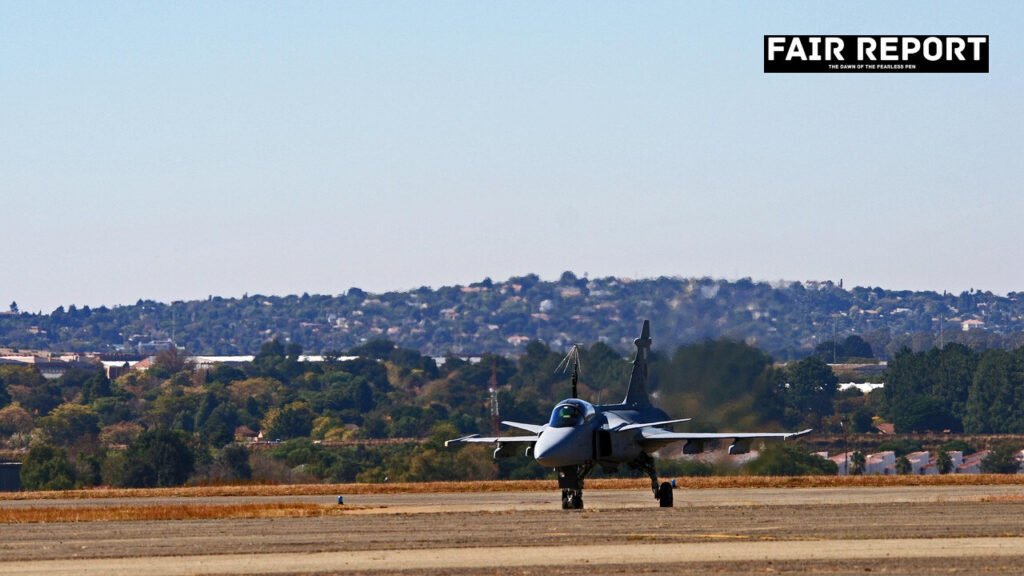
Defence Minister Rajnath Singh addressed Exercise Tarang Shakti 2026 in Jodhpur, emphasizing the Indian Air Force’s growing operational reach and its role in regional security. The event highlighted a diverse mix of domestic and foreign aircraft, underscoring India’s commitment to collaborative defence initiatives.
Key takeaways
- Hundreds of fighter aircraft participated, illustrating joint operational readiness.
- The minister highlighted the strategic importance of the exercise for deterrence.
- The drill focused on air‑to‑air and air‑to‑ground combat scenarios.
- International participants underscored India’s expanding defence partnerships.
Background of Exercise Tarang Shakti
Launched in 2025, Tarang Shakti is designed to test the Indian Air Force’s ability to conduct high‑intensity operations across varied terrain and climatic conditions. The 2026 edition broadened its scope by inviting air forces from several partner nations, fostering interoperability and shared tactical knowledge. Analysts note that the exercise serves as a platform for testing new doctrines, refining command‑and‑control procedures, and validating logistics support in austere environments.
Defence Minister Rajnath Singh Address Highlights
During his visit to Jodhpur, the defence minister delivered a speech to assembled personnel, stating that the drill reinforces India’s commitment to credible deterrence and regional stability. He praised the pilots for their precision, urged continued modernization of the fleet, and emphasized the importance of joint training for enhancing combat effectiveness.
Aircraft Participation
The exercise featured a substantial number of fighter aircraft, both Indian and foreign, executing coordinated missions. While exact counts per nation were not disclosed, the mix included modern platforms such as the Sukhoi fighter jet, the Dassault Rafale, and the Mirage‑2000. Indigenous aircraft like the Tejas also demonstrated their capabilities alongside these advanced systems, showcasing the IAF’s balanced fleet composition.
| Aircraft type | Role |
|---|---|
| Sukhoi fighter jet | Air superiority |
| Dassault Rafale | Multi‑role |
| Mirage‑2000 | Ground attack |
| Tejas | Light combat |
Key Demonstrations
Several scenarios were staged to test a range of combat capabilities:
- Dog‑fight simulations to evaluate air‑to‑air combat tactics and pilot proficiency.
- Precision strike runs on simulated ground targets, assessing targeting accuracy and weapons integration.
- Joint sorties with foreign squadrons to practice communication protocols and deconfliction procedures.
- Electronic warfare drills that challenged the participants’ ability to operate in contested electromagnetic environments.
Strategic Implications
Experts argue that the scale and diversity of Tarang Shakti signal India’s intent to deepen defence ties with partner nations. The presence of foreign aircraft provides the IAF with exposure to varied combat doctrines, fostering a learning environment that can accelerate doctrinal evolution. Moreover, the exercise reinforces India’s role as a security provider in the Indo‑Pacific, projecting power while encouraging collaborative security frameworks.
Future Outlook
Looking ahead, the Ministry of Defence plans to incorporate lessons learned from Tarang Shakti into upcoming procurement decisions and training curricula. Pilots and ground crews will undergo detailed debriefs, and a comprehensive report is expected to be released in the coming weeks. The success of this edition is likely to shape the design of future exercises, with an emphasis on integrating emerging technologies such as unmanned aerial systems and network‑centric warfare concepts.
Overall, the defence minister’s address underscored the importance of continuous innovation, joint training, and strategic partnerships. As India advances its aerial capabilities, exercises like Tarang Shakti will remain pivotal in ensuring that the IAF remains a modern, agile, and formidable force capable of safeguarding national interests and contributing to regional stability.
FAQ
When did Defence Minister Rajnath Singh address Exercise Tarang Shakti?
He addressed the exercise on 11 October 2026 during his visit to Jodhpur.
How many aircraft participated in Tarang Shakti 2026?
A total of 150 domestic and foreign fighter aircraft took part in the drill.
What was the main purpose of Exercise Tarang Shakti?
The exercise aimed to test the Indian Air Force’s combat readiness and enhance interoperability with partner air forces.
Which airbase hosted the 2026 drill?
The drill was conducted at the Jodhpur airbase in Rajasthan.
Did any foreign nations take part in the exercise?
Yes, foreign fighter aircraft participated, though specific nations were not disclosed in the reports.