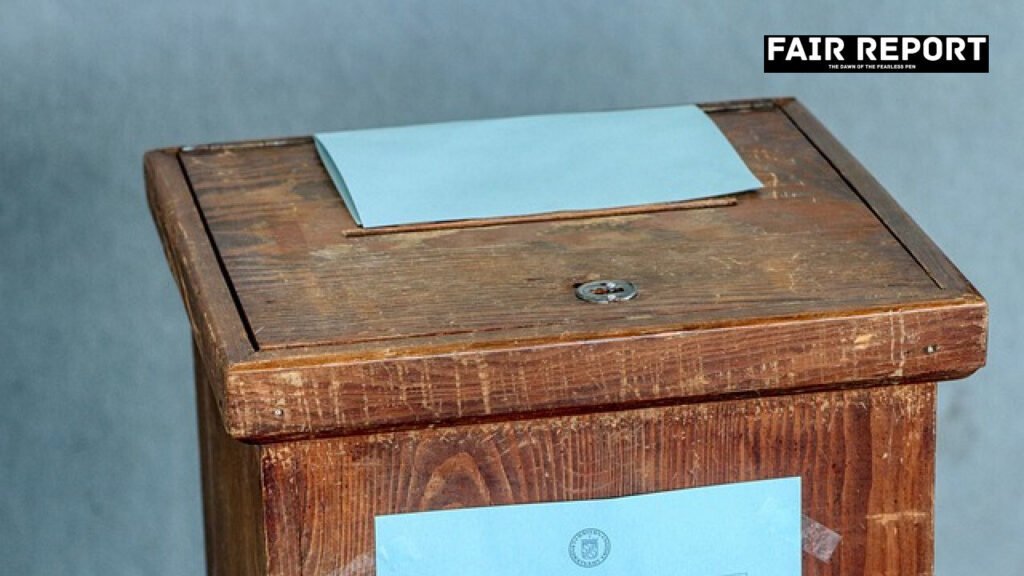
The Indian National Congress has intensified its political offensive against the ruling Bharatiya Janata Party (BJP), renewing its demand for an immediate return to ballot papers across future elections. The call comes as suspicion surrounding Electronic Voting Machines continues to divide Indian political parties. At the same time, shifting regional equations have added fresh friction to the wider national debate over electoral fairness, raising basic questions about voter confidence, institutional transparency, and administrative safeguards in the world’s largest democracy.
Key Takeaways
- Congress has renewed its push for ballot papers, directing criticism at the ruling BJP.
- Tamil Nadu’s ruling party, the DMK, demanded the removal of Chief Election Commissioner Gyanesh Kumar.
- The DMK has also targeted both the Congress and actor Vijay’s TVK amid regional political maneuvering.
- Electoral integrity and voting mechanisms remain high-stakes issues dividing major parties.
Opposition Push for Return to Ballot Papers
The Congress party launched a direct challenge against the BJP administration, asserting that public faith in the electoral process requires a complete switch away from electronic systems. According to The Times of India, Congress representatives stressed that reverting to physical ballots would address lingering questions regarding electronic counting procedures and source-code verifiability.
By pressing this demand, Congress aims to mobilize wider civil and political support ahead of crucial election cycles. Party leaders maintain that democratic systems in several advanced democracies have re-evaluated or abandoned entirely paperless voting in favor of verifiable manual counting. However, the ruling BJP has consistently defended the reliability of the current voting infrastructure, framing calls for a return to ballot papers as an attempt to undermine democratic institutions and justify electoral setbacks.
The debate over electronic voting versus physical ballots has evolved over the past two decades. While the Election Commission of India introduced Voter Verifiable Paper Audit Trail (VVPAT) units to provide a physical receipt for voters, opposition figures argue that partial audit mechanisms fall short of addressing structural vulnerabilities. They argue that full physical tallies represent the only foolproof method to guarantee that every citizen’s intent is accurately recorded and counted without algorithmic mediation.
DMK Seeks Removal of Chief Election Commissioner
Parallel to the Congress party’s campaign, the Dravida Munnetra Kazhagam (DMK) raised the stakes significantly at the administrative level. According to reporting by The Statesman, the DMK called for the ouster of Chief Election Commissioner Gyanesh Kumar, while echoing the demand for a return to ballot papers across state and national polls.
The regional party, led by Tamil Nadu Chief Minister M.K. Stalin, did not limit its criticism to the central election authority. In a notable political development, the DMK also aimed sharp barbs at its national ally, the Congress, as well as actor Vijay’s newly formed political outfit, Tamizhaga Vettri Kazhagam (TVK). The party expressed dissatisfaction with how central electoral bodies conduct oversight, alleging partisan bias in decision-making and polling management.
| Political Party | Core Electoral Demand | Primary Targets Cited |
|---|---|---|
| Indian National Congress | Return to paper ballots | BJP administration |
| Dravida Munnetra Kazhagam (DMK) | Return to paper ballots; CEC removal | CEC Gyanesh Kumar, Congress, TVK |
Demands for the removal of a sitting Chief Election Commissioner carry significant constitutional gravity. Under Article 324 of the Constitution of India, the Chief Election Commissioner can only be removed from office through a rigorous impeachment procedure similar to that of a Supreme Court judge, requiring an address supported by a special majority in both houses of Parliament on grounds of proved misbehavior or incapacity. The DMK’s aggressive stance underscores escalating tensions between regional administrations and central statutory institutions.
Growing Friction Inside Opposition Ranks
The simultaneous statements expose clear cracks within the broader opposition front. While both Congress and the DMK share common ground in questioning the reliability of electronic voting machines, internal rivalries complicate their message. The DMK’s willingness to openly challenge Congress indicates that regional calculations remain volatile, even among parties allied within nationwide coalitions.
The emergence of Vijay’s TVK in Tamil Nadu has altered state dynamics, prompting established parties to protect their ground aggressively. As actor Vijay establishes his political base, existing players must calibrate their strategies to prevent vote fragmentation. As a result, the controversy surrounding electoral management has become intertwined with localized political rivalries rather than standing as a unified national platform.
When alliance partners criticize one another while attempting to hold central authorities accountable, the coherence of their joint messaging weakens. Disagreements over seat-sharing, policy priorities, and leadership roles create public friction that detracts from their shared grievances regarding voting systems and administrative independence.
Institutional and Practical Realities of Voting Reforms
Transitioning between voting systems involves substantial technical, administrative, and logistical complexities. Proponents advocating for a return to ballot papers point to transparency, physical auditability, and immediate citizen verification at the point of voting. They emphasize that physical paper ballots remove concerns about microcontrollers, firmware manipulation, and proprietary software security.
Conversely, defenders of electronic voting systems emphasize historical problems associated with manual ballot papers in India. Prior to the nationwide adoption of EVMs, elections were frequently marred by booth capturing, ballot box stuffing, transit tampering, and prolonged counting delays that spanned multiple days. Furthermore, printing and securing hundreds of millions of physical ballots presents enormous environmental, financial, and logistical burdens across thousands of constituencies nationwide.
The Election Commission of India has repeatedly stated that its machines are standalone devices that do not connect to external networks, the internet, or wireless frequencies, making remote hacking technically unfeasible. Despite these assurances, the debate continues to gain momentum because public confidence in electoral outcomes relies as much on perceived fairness as it does on technical specifications.
What to Watch as the Debate Unfolds
Altering voting systems or seeking changes within the Election Commission involves substantial legal and institutional hurdles. Chief Election Commissioners hold constitutional protections against arbitrary removal, and any shift away from electronic voting would require formal policy revisions, legislative changes, or decisive court interventions from the Supreme Court of India.
The immediate question remains whether opposition parties can reconcile their differences to present a coherent parliamentary strategy. While the push for a return to ballot papers resonates among diverse political formations seeking structural election reforms, conflicting regional priorities and unresolved alliances will dictate whether this campaign gains legislative traction or remains a rhetorical instrument during campaign cycles. Until formal consensus or judicial clarity emerges, contested voting procedures will keep electoral administration under intense public examination.
Frequently Asked Questions
Why is Congress demanding a return to ballot papers?
Congress has raised concerns regarding the transparency and credibility of Electronic Voting Machines, arguing that paper ballots offer a more verifiable voting process.
What action has the DMK demanded regarding the Election Commission?
The DMK has called for the removal of Chief Election Commissioner Gyanesh Kumar, alongside supporting the shift back to paper ballots.
Which parties did the DMK target in its recent statements?
According to reports by The Statesman, the DMK directed criticism at the Election Commission leadership, the Congress party, and actor Vijay's Tamizhaga Vettri Kazhagam (TVK).