Actor Yami Gautam participated in Dussehra festivities in the national capital on Tuesday, taking center stage to perform the ceremonial burning of the demon king effigy. The high-profile Yami Gautam Ravan Dahan appearance highlighted the annual Vijayadashami observances held across public grounds in Delhi, drawing tens of thousands of devotees, cultural enthusiasts, and families who gathered to mark the triumph of virtue over vice.
Key Takeaways
- Actor Yami Gautam attended the grand Dussehra festivities in Delhi on Tuesday.
- The actor carried out the ceremonial Ravan Dahan ritual to mark Vijayadashami.
- The event took place alongside nationwide effigy burnings and spiritual observances.
- Delhi hosts several historic Ramlila grounds where major cultural and Bollywood celebrities regularly take part.
- Municipal and environmental agencies collaborated to deploy green crackers and post-event cleanup protocols.
Ceremonial Ravan Dahan in the Capital
Dussehra, also referred to across the subcontinent as Vijayadashami, marks the grand culmination of the nine-night Navratri festival. Across Delhi, massive open grounds host elaborate theatrical enactments of the ancient epic Ramayana before setting fire to towering effigies of Ravana, his brother Kumbhakarna, and son Meghnada. Gautam took part in these rituals on Tuesday, joining organizers, religious patrons, and civic dignitaries to initiate the fire that brought down the giant effigy.
Large crowds packed into iconic open venues across the capital, including the grounds surrounding the Red Fort and central community maidans, to witness the spectacle firsthand. The burning of the effigies remains a primary public highlight of the festival in northern India, drawing thousands of spectators who celebrate the symbolic restoration of cosmic balance. As reported by The Hindu, festival committees across Delhi traditionally invite cultural icons to illuminate the effigies at the designated auspicious moment.
The Craftsmanship Behind Delhi’s Towering Effigies
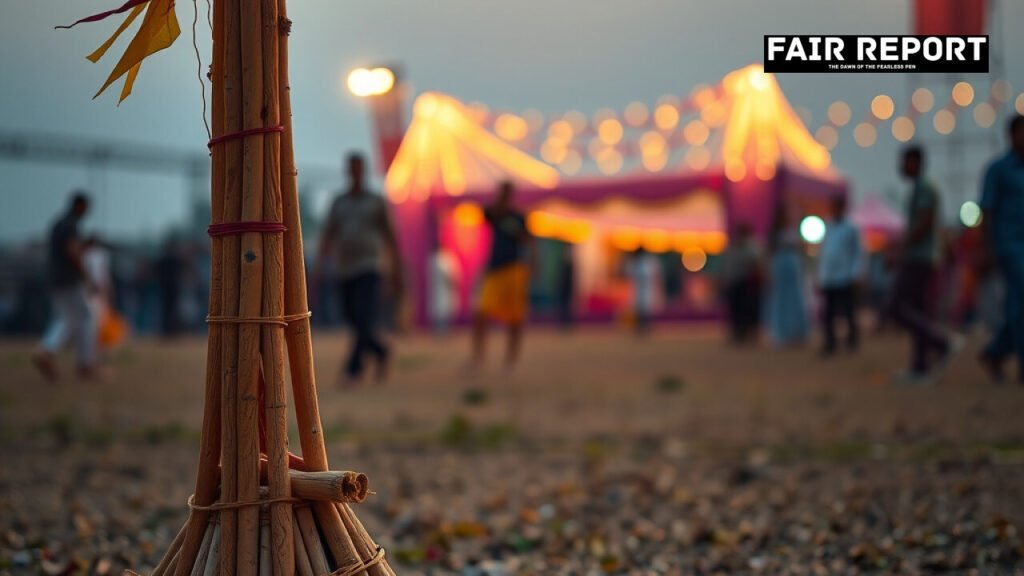
Months before the festive evening arrives, communities across the city begin preparation for the massive structural installations. Neighborhoods such as Titarpur in West Delhi transform into open-air workshops where multi-generational artisans assemble the bamboo lattices, papier-mâché faces, and decorated fabric robes that define the effigies. These giant structures frequently stand between 50 and 80 feet in height, requiring specialized engineering to stand firmly upright in outdoor conditions.
The craftspeople behind these monumental works of folk art labor through unpredictable late-monsoon weather to ensure that the figures are completely dry and securely balanced. Inside each structure, organizers carefully position sparklers, color fountains, and low-smoke pyrotechnics designed to detonate sequentially during the climax of the festival.
The Significance of Yami Gautam Ravan Dahan Ceremony
The symbolic burning of Ravana represents the ultimate victory of righteousness (dharma) over wrongdoing (adharma), commemorating Lord Rama’s historic victory as chronicled in the Ramayana. When performing the Yami Gautam Ravan Dahan, the actor adhered to longstanding tradition, which often involves shooting a symbolic flaming arrow or pressing an automated ceremonial ignition switch that triggers the pyrotechnics packed inside the effigy structure.
For Gautam, who has consistently engaged with diverse cinematic roles that celebrate courage and social consciousness, partaking in the ceremony resonated deeply with attendees. The audience applauded as the central effigy went up in flames, followed in quick succession by the figures representing Kumbhakarna and Meghnada, symbolizing the destruction of pride, delusion, and injustice.
| Festival Component | Symbolic Meaning | Traditional Practice |
|---|---|---|
| Effigy Burning | Destruction of negative qualities and ego | Igniting pyrotechnics inside bamboo effigies |
| Vijayadashami | Triumph of righteousness (dharma) | Public gatherings and weapon blessing (Shastra Puja) |
| Ramlila Plays | Moral life lessons from the epic Ramayana | Ten-day dramatic performances in open maidans |
| Community Feasts | Social unity and mutual prosperity | Sharing festive sweets like jalebi and fafda |
Environmental Safeguards and Green Pyrotechnics
In recent years, organizing committees across the capital have faced the dual challenge of preserving cherished heritage traditions while adhering to stringent environmental benchmarks. To minimize seasonal smoke, committees have increasingly transitioned away from conventional loud firecrackers in favor of certified green crackers approved by regulatory scientific bodies.
Local authorities, including civic authorities in Delhi and regional fire departments, implement strict perimeter zones around every burning effigy. Barricades ensure that spectators remain at safe distances from falling embers, while on-site fire tenders and first-aid response units stand ready throughout the evening. Furthermore, water misters and anti-smog guns are frequently deployed around the venue perimeters once the ritual completes to accelerate particulate settling.
Celebrity Culture at Delhi Festivals
Delhi’s Ramlila and Dussehra celebrations have an enduring history of inviting prominent personalities from cinema, sports, and public administration to inaugurate or conclude the festivities. The inclusion of renowned artists reflects the profound mainstream appeal of the city’s community events, which serve as a nexus between classical heritage and modern mass media.
Such public appearances give civic festivities significant visibility across digital media, regional networks, and national news channels. While traditional charitable trusts and community boards oversee the religious liturgy and organizational logistics, prominent guests help draw public attention to the rich heritage preserved within the cultural festivals of India, encouraging younger generations to stay connected with their artistic and historical roots.
Observances Across the Country
Similar observances took place nationwide on Tuesday, illustrating the vibrant regional tapestry of Vijayadashami. In the southern state of Karnataka, the world-renowned Mysuru Dasara procession saw decorated caparisoned elephants carry the idol of Goddess Chamundeshwari through cheering crowds. Meanwhile, across West Bengal and eastern India, millions gathered for the solemn immersion processions of Durga idols marking the end of Durga Puja.
In northern and western states, neighborhood youth clubs, housing societies, and municipal bodies worked in close coordination to facilitate smooth movement for millions of commuters navigating congested streets. The multi-faith engagement and communal volunteerism displayed throughout these celebrations underscored the festival’s unifying cultural power across geographic boundaries.
Looking Ahead to the Festive Season
With Vijayadashami concluded, the subcontinent enters the active countdown toward Diwali, which falls exactly twenty days after Dussehra according to the traditional lunar calendar. Sanitation teams and municipal workers mobilized overnight to clear public parks and maidans of debris, ensuring that public recreational spaces could quickly return to regular community use.
As cities gear up for the upcoming Festival of Lights, the successful conclusion of massive events like the Yami Gautam Ravan Dahan demonstrates how modern metropolitan centers can balance centuries-old spiritual traditions with contemporary crowd management, environmental consciousness, and widespread public enthusiasm.
Frequently Asked Questions
What did Yami Gautam do during the Delhi Dussehra celebrations?
Actor Yami Gautam attended the festivities in New Delhi on Tuesday and carried out the ceremonial burning of the Ravana effigy, known as Ravan Dahan.
What is the symbolic meaning of Ravan Dahan?
Ravan Dahan symbolizes the victory of good over evil, commemorating Lord Rama's victory over the demon king Ravana in the epic Ramayana.
Why are public figures invited to Delhi Dussehra events?
Organizers of major Ramlila grounds in Delhi traditionally invite actors, athletes, and political dignitaries to participate in rituals, adding broad public engagement to the community celebrations.