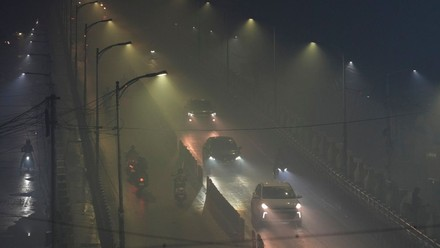
NEW DELHI : A thick layer of toxic smog enveloped the National Capital Region and several northern states on Monday morning as widespread post-Diwali pyrotechnics combined with stagnant atmospheric conditions to push air quality into hazardous levels and drastically reduce visibility.
Monitoring data from the Central Pollution Control Board (CPCB) highlighted severe pollution across Delhi’s major hubs. Patparganj and ITO breached the ‘Severe’ benchmark with AQI readings of 418 and 406 respectively, while Rajiv Chowk and South Extension hovered in the upper reaches of the ‘Very Poor’ category at 381 and 360.
The environmental fallout extended deep into neighboring states. Ten cities across Uttar Pradesh reported dangerous atmospheric levels, with early morning readings in Prayagraj, Gorakhpur, and Lucknow crossing the extreme 500 mark alongside dense fog and night temperatures dipping below 15°C. In Madhya Pradesh, festive emissions pushed Indore’s AQI to 320, even as a winter chill dropped temperatures under 14°C in 14 cities across the state.
Defying the broader regional cooling trend, western Rajasthan experienced an unseasonal thermal spike. Barmer recorded a maximum daytime temperature exceeding 38°C—only the second time in the past decade that November heat in the district has crossed that threshold. Local administration units across the Indo-Gangetic belt remain on alert to enforce mitigation protocols under the Graded Response Action Plan.