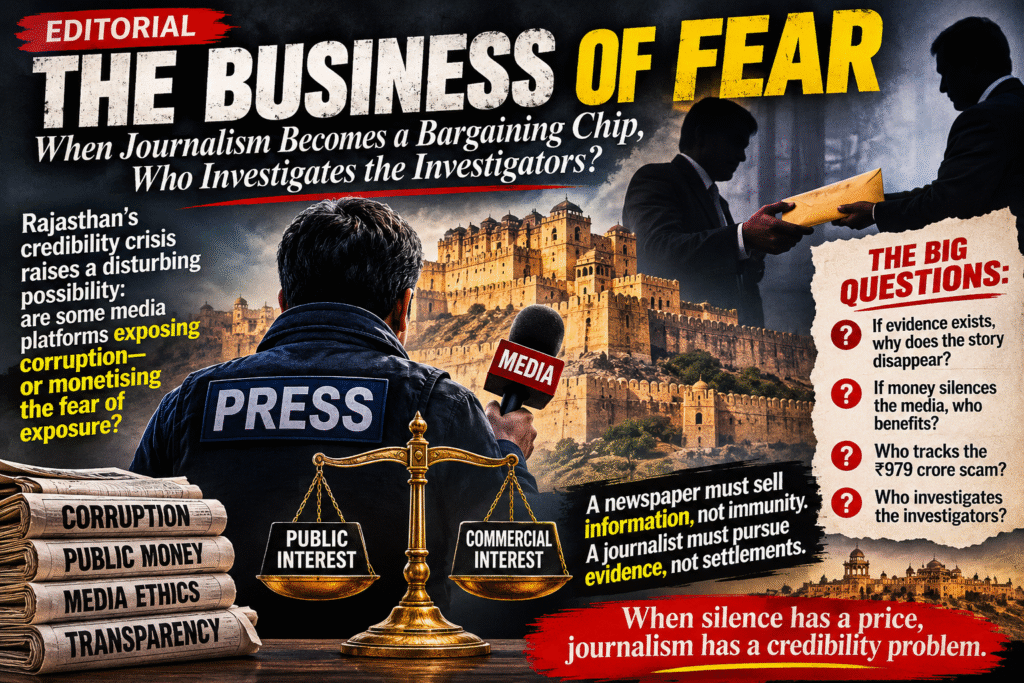
Rajasthan’s credibility crisis raises a disturbing possibility: are some media platforms exposing corruption-or monetising the fear of exposure?
There is a fundamental difference between exposing corruption and exploiting the fear of exposure. Journalism is supposed to investigate the powerful, not negotiate with them behind closed doors.
Yet Rajasthan must confront an uncomfortable question: has investigative journalism, in some instances, become a business in which damaging information is more commercially valuable unpublished than published?
Consider the hypothetical possibilities.
If a newsroom possesses authenticated documents proving corruption, why would publication suddenly become negotiable? If an accused individual pays to prevent an investigation from appearing in print or on television, who benefits-the public or the alleged wrongdoer? And if a media organisation can demand accountability from ministers, why should its own financial relationships remain beyond scrutiny?
These questions acquire greater significance following the October 2025 detention of two journalists associated with The Sootr over allegations of demanding ₹5 crore to remove reports concerning Deputy Chief Minister Diya Kumari. The journalists denied wrongdoing and defended their reporting. Allegations are not convictions; due process must determine the facts.
Meanwhile, the Jal Jeevan Mission investigation exposed alleged irregularities involving tenders worth approximately ₹979 crore. The CBI registered an FIR in May 2024.
The contrast deserves attention. Who tracks the money allegedly lost to corruption? Who follows the procurement records, beneficiaries, departmental complicity and subsequent legal proceedings? And who investigates allegations that media influence itself may have been commercially exploited?
Rajasthan needs an independent examination of media ownership, political patronage, paid coverage, advertising arrangements and alleged coercive practices.
Press freedom cannot become immunity from investigation. Equally, criminal allegations cannot become instruments to intimidate uncomfortable journalists.
A newspaper must sell information, not immunity. A journalist must pursue evidence, not settlements.
When silence has a price, journalism has a credibility problem. And when the watchdog itself becomes suspect, who guards the public?
When Journalism Becomes a Bargaining Chip, Who Investigates the Investigators?