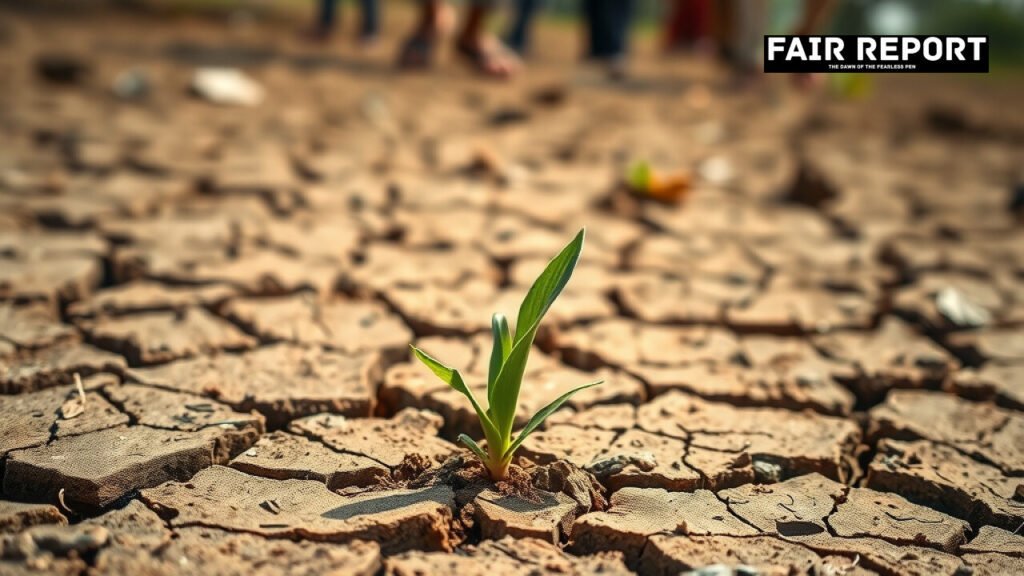
The Bharatiya Janata Party has demanded an urgent special drought package to rescue cultivators struggling against prolonged dry spells and erratic weather. Addressing the agrarian distress caused by severe water shortages, party representatives highlighted that rural families are facing mounting debt after losing critical agricultural investments across consecutive sowing periods.
Key Takeaways
- BJP leadership has formally requested a comprehensive financial relief package for dry-spell affected farmers.
- Party leader Gudur demanded dedicated Rythu Bharosa assistance to offset crop losses tied to El Nino patterns.
- Officials warned that agricultural producers cannot withstand the collapse of a full cultivation cycle alone.
- Demands focus on timely administrative surveys, livestock support, and direct monetary compensation before debts escalate.
Mounting Pressure for a Special Drought Package
Agrarian communities have come under immense pressure following consecutive weeks of rain deficits, leaving swathes of arable land barren. In response to widespread distress in rural belts, party representatives called on state authorities to intervene without delay. The leadership argued that leaving agricultural producers to absorb weather shocks unassisted threatens the stability of the entire rural economy.
“Farmers could not be expected to sacrifice an entire cropping season without adequate financial protection,” stated BJP leader Gudur while highlighting the scale of rural vulnerability.
The demand underscores that when rainfall fails across key sowing months, traditional contingency measures prove insufficient. The party insists that standard compensation rates cannot cover the steep rise in operational costs, making a dedicated special drought package necessary to prevent widespread farm insolvency.
Expanding Rythu Bharosa to Counter El Nino Losses
A central pillar of the appeal involves strengthening welfare disbursements through tailored Rythu Bharosa relief. BJP leader Gudur pointed out that abnormal heat and erratic rainfall driven by El Nino weather patterns have dried up fields during critical vegetative stages. Detailed meteorological observations compiled by the India Meteorological Department have confirmed widespread moisture stress across multiple interior agricultural belts during the season. Without targeted financial supplements, smallholders cannot recover the money already spent on land preparation, tilling, and seed distribution.
The leadership emphasized that welfare mechanisms must adapt dynamically when natural factors disrupt seasonal planning. The proposed interventions aim to offset input investments so that farmers can retain enough capital to prepare for future planting cycles without sinking into high-interest private debt.
| Agrarian Challenge | Proposed Intervention | Intended Beneficiaries |
|---|---|---|
| Severe rainfall deficit | State-funded special drought package | All drought-notified regions |
| El Nino weather damage | Expanded Rythu Bharosa allocations | Small and marginal cultivators |
| Lost sowing investments | Direct fiscal support per acre | Debt-stressed farm households |
| Fodder and water depletion | Subsidized feed depots and tanker supply | Livestock owners and pastoralists |
Assessing Ground Realities and Water Table Depletion
The severity of the current dry spell extends well beyond topsoil desiccation. Across several rural mandals, groundwater tables have receded rapidly, rendering shallow borewells entirely non-functional. Farmers who invested borrowed capital into deepening borewells or running diesel-powered pump sets have seen operational expenditure skyrocket without yielding salvageable harvests.
In many tracts, cash crops such as cotton, groundnut, and pulses suffered extensive moisture stress before flowering, resulting in poor pod formation and stunted growth. For paddy cultivators relying on canal irrigation, curtailed water releases created cracked seedbeds and parched standing crops. When agricultural yields decline so steeply, local rural labor markets simultaneously dry up, cutting off secondary wage income for landless families who depend on weeding and harvest contracts.
Protecting Livestock and Mitigating Fodder Shortages
Prolonged heat and moisture deficits also create critical fodder shortages, placing pastoralists and small dairy operators in precarious conditions. Without standing stubble, green pasture, or community grazing lands, rural families find it increasingly difficult to sustain draft animals and milch cattle. Distress sales of livestock at depressed market prices historically accelerate when dry conditions persist without state intervention.
BJP representatives emphasized that a meaningful relief plan must incorporate cattle preservation initiatives. Demands include setting up emergency fodder banks, establishing subsidized fodder distribution centers, and ensuring potable water supply in cattle-dense villages to prevent heat-related cattle mortality and preserve rural milk yields.
Credit Restructuring and Institutional Debt Protections
Agricultural credit lines are already freezing across affected regions as growers struggle to repay seasonal crop loans taken from primary agricultural credit societies, commercial banks, and regional rural banks. The threat of compounding interest and aggressive recovery procedures looms large over defaulting farm households.
The leadership called upon state authorities to engage the State Level Bankers’ Committee to implement immediate credit restructuring. Recommended actions include converting short-term cultivation loans into medium-term obligations, declaring a formal moratorium on loan recovery drives, and waiving interest charges during the notified distress window. A comprehensive state intervention must work in lockstep with institutional lenders to prevent cultivators from turning to unregulated private moneylenders charging extortionate interest rates.
Administrative Surveys and Objective Enumeration
To ensure that financial assistance reaches eligible recipients, party functionaries have petitioned revenue authorities to conduct prompt, transparent enumeration drives across every affected revenue division. Relying solely on remote satellite indices can occasionally overlook localized crop failures resulting from localized micro-climatic disparities.
Joint inspection teams—comprising officials from the agriculture, revenue, and panchayat raj departments—are urged to carry out physical field verifications alongside digital survey applications. Clear timelines must be established for notifying drought-affected mandals, publishing draft beneficiary lists at gram panchayat offices, and addressing farmer grievances before disbursement begins.
Next Steps for Affected Farming Households
As calls intensify for a comprehensive special drought package, local administrative bodies are being urged to initiate ground-level enumeration drives without procedural delay. Cultivators experiencing extensive crop failure should document their sowing records, retain photographs of damaged plots, and keep receipts for input expenditures readily accessible. Registering local crop damage assessments with village revenue officers ensures that individual holdings are accurately accounted for whenever relief measures and insurance claims are processed.
Community leaders and farmer collectives are encouraged to submit joint representations detailing water availability, borewell failure rates, and crop-cutting yield estimates to district collectors. Maintaining unified documentation remains the most effective way for agrarian communities to secure timely fiscal compensation, institutional loan restructuring, and targeted state assistance throughout the prevailing dry season.
Frequently Asked Questions
Why is the BJP seeking a special drought package?
The party is demanding targeted financial assistance because severe dry spells have ruined cropping seasons, leaving cultivators with heavy input debts and no harvest income.
What specific assistance has been demanded under Rythu Bharosa?
BJP leader Gudur has called for a special disbursement under the Rythu Bharosa program to provide direct compensation to cultivators impacted by El Nino-induced crop damage.
What should farmers do while awaiting drought relief decisions?
Cultivators should track official drought declarations and ensure their land tenancy, sowing logs, and input expenditure receipts are filed with local agriculture and revenue offices.