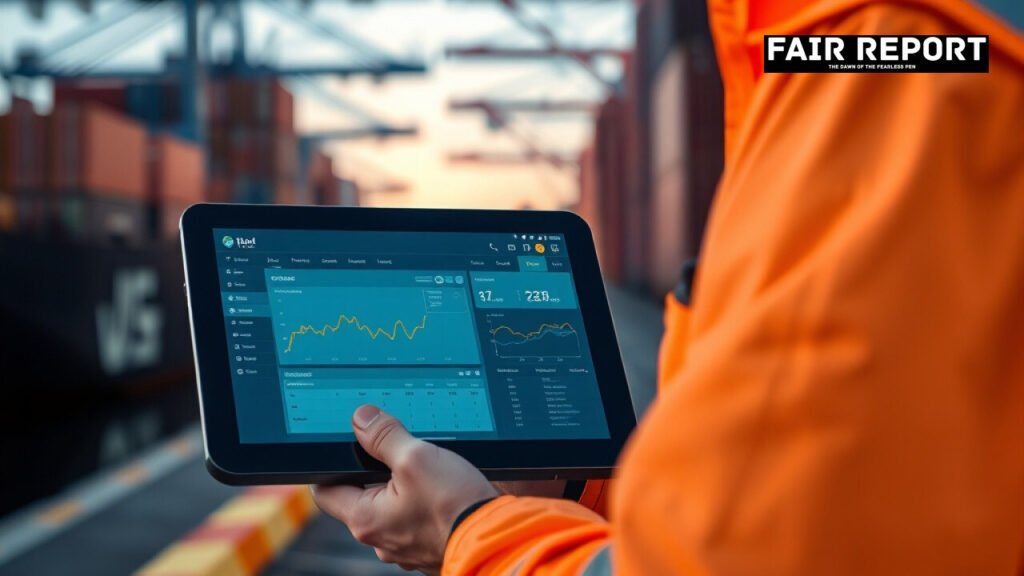
India Rotterdam digitalisation has been announced by the port authorities of India and Rotterdam, aiming to streamline cargo processes and accelerate evacuation.
Commerce Minister Piyush Goyal said the partnership will reduce ship turnaround times, supporting India’s goal to quadruple port capacity by 2047.
Key takeaways
- India and Rotterdam ports collaborate to digitalise cargo processes.
- The initiative targets faster evacuation and reduced ship turnaround.
- It aligns with India’s plan to quadruple port capacity by 2047.
- Commerce Minister Piyush Goyal highlights the trade‑boosting potential.
Why Digitalisation Matters
Maritime trade relies heavily on efficient cargo handling. Digital cargo systems can automate paperwork, track shipments in real time, and reduce manual bottlenecks. For ports, this translates into shorter ship turnaround times and higher throughput.
India Rotterdam digitalisation: A Strategic Initiative
The partnership is more than a technical upgrade; it is a strategic alignment of India’s growing maritime ambitions with Rotterdam’s proven digital ecosystem. By integrating customs, stevedores, terminal operators, and shipping lines into a single digital platform, the initiative promises a seamless flow of information and a reduction in administrative delays.
Key Objectives of the Collaboration
The partnership focuses on two main goals: speed up cargo evacuation from vessels and cut the overall time ships spend at berth. Both authorities will share best practices and deploy integrated software that connects customs, stevedores, and terminal operators. This port digitalisation effort is expected to streamline the entire supply chain.
Technology Stack and Integration
The digital framework will leverage a combination of blockchain for secure data exchange, Internet of Things (IoT) sensors for real‑time vessel monitoring, and advanced analytics for predictive maintenance. Rotterdam’s existing digital platform, known as the Rotterdam Digital Port, will serve as the backbone, while Indian ports will adapt the system to local regulatory requirements.
Stakeholder Engagement and Training
Successful implementation hinges on the active participation of all stakeholders. Port authorities, shipping companies, freight forwarders, and customs officials will undergo joint training sessions to ensure smooth adoption. Regular workshops and simulation drills will help identify potential bottlenecks before they affect actual cargo movements.
India’s Port Capacity Expansion
Commerce Minister Piyush Goyal has outlined a roadmap to quadruple India’s port capacity by 2047. The digitalisation of cargo processes is a critical lever in that strategy, as it allows existing infrastructure to handle more traffic without costly physical expansions. The Rotterdam partnership provides a proven model for technology adoption.
Economic Impact and Trade Implications
Faster cargo movement reduces shipping costs and improves delivery reliability for exporters and importers. By cutting turnaround times, India can attract more transshipment traffic and strengthen its position in global supply chains. The initiative also signals to international partners that India is committed to modernising its logistics backbone.
According to a recent Bloomberg article, the collaboration is expected to generate an estimated $5 billion in annual economic benefits for the Indian maritime sector.
Future Outlook and Sustainability
Beyond immediate efficiency gains, the digitalisation effort aligns with sustainability goals. Automated processes reduce fuel consumption and emissions by minimizing idle times. Additionally, data analytics will enable better resource allocation, further supporting India’s commitment to the Paris Agreement targets.
Case Studies from Rotterdam
Rotterdam has already implemented digital solutions such as the Port of Rotterdam Digital Hub, which integrates berth management, customs clearance, and cargo tracking into a single interface. The hub has reduced average berth time by 25% and cut administrative paperwork by 40%. These successes provide a template for Indian ports to emulate.
Challenges and Mitigation Strategies
While the benefits are clear, the partnership faces challenges such as data privacy concerns, interoperability between legacy systems, and the need for skilled personnel. To address these, the authorities will establish a joint task force, invest in cybersecurity measures, and launch a certification program for digital port operators.
Conclusion
The India Rotterdam digitalisation initiative represents a milestone in global maritime logistics. By combining cutting‑edge technology with collaborative governance, the partnership sets a new standard for efficiency, sustainability, and economic growth in the shipping industry.
FAQ
What is the main goal of the India-Rotterdam partnership?
To digitalise cargo processes, speeding up evacuation and reducing ship turnaround times.
Who announced the collaboration?
Commerce and Industry Minister Piyush Goyal.
How does this fit into India's broader strategy?
It supports the plan to quadruple port capacity by 2047.