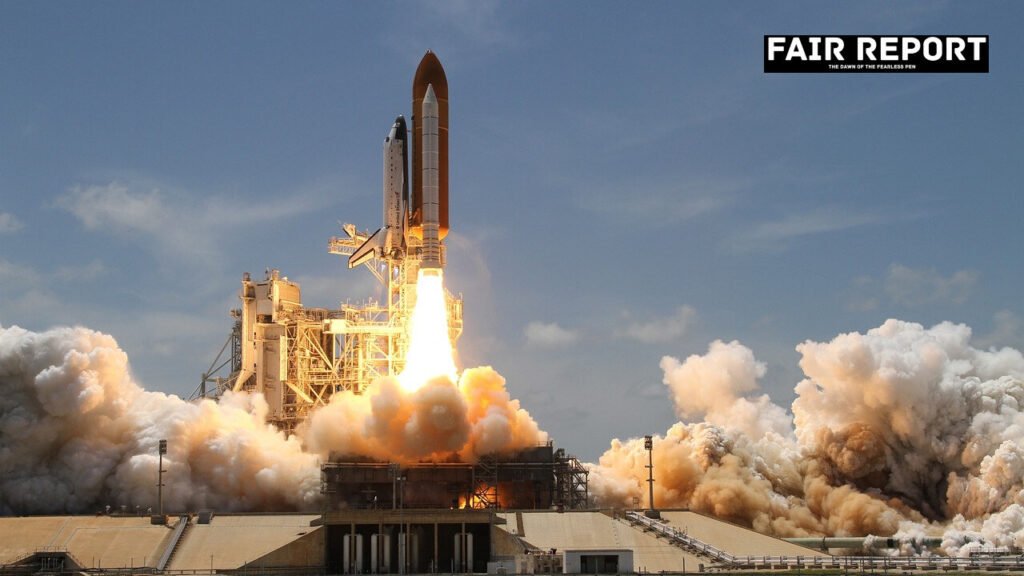
Gujarat Startup SatLeo Labs achieved a historic milestone by successfully placing India’s first commercial thermal payload, TAPAS-1, into orbit aboard a SpaceX rocket. This launch not only underscores the technical prowess of the company but also highlights the rapid evolution of Gujarat’s emerging space technology ecosystem.
Key takeaways
- Gujarat Startup SatLeo Labs launches India’s first commercial thermal payload TAPAS-1
- The payload rode on a SpaceX launch vehicle, marking a first for an Indian commercial payload
- The achievement signals Gujarat’s growing reputation as a hub for space innovation
Gujarat Startup SatLeo Labs: A Deep Dive
Founded in 2019 in Ahmedabad, SatLeo Labs began as a modest research team focused on miniaturized thermal imaging sensors. Over the past five years, the company has secured funding from the Gujarat Innovation Fund, partnered with the Indian Space Research Organisation (ISRO), and built a state‑of‑the‑art test facility in the Space Technology corridor of the state. The startup’s core mission is to develop affordable, high‑resolution thermal payloads for a range of applications, from climate monitoring to precision agriculture.
Introduction to SatLeo Labs
SatLeo Labs leverages a blend of indigenous engineering talent and strategic collaborations with global aerospace firms. Its flagship product, the Thermal Atmospheric Payload for Satellite (TAPAS‑1), integrates a compact infrared sensor array with on‑board data processing algorithms that reduce downlink bandwidth by 40 % while preserving image fidelity. The payload’s mass is under 5 kg, making it an attractive option for rideshare missions.
Why TAPAS‑1 Matters
The ability to capture high‑frequency thermal data from low‑Earth orbit opens new possibilities for monitoring heat islands, tracking wildfires, and assessing crop health. Prior to TAPAS‑1, Indian commercial entities relied on foreign‑made thermal instruments, which added cost and lead‑time. By commercialising a home‑grown solution, SatLeo Labs is positioning Gujarat as a cost‑effective source for satellite payloads.
The Significance of the Launch
The launch took place on 12 May 2026 from Cape Canaveral, where a Falcon 9 rocket carried a rideshare manifest that included several nanosatellites from Europe and Asia. TAPAS‑1 was integrated as a secondary payload, demonstrating that Indian commercial hardware can meet the rigorous standards of a private launch provider. This achievement is proof of the rigorous testing regime at SatLeo’s facilities, which includes vibration, thermal‑vacuum, and radiation hardening tests that align with NASA and ESA protocols.
Beyond the technical triumph, the launch sends a clear signal to investors: Gujarat’s policy framework, which includes tax incentives, dedicated incubators, and a fast‑track approval process for aerospace projects, is bearing fruit. The state’s Startup Ecosystem has already attracted more than 150 space‑related ventures, and SatLeo Labs is now the flagship success story.
Economic and Strategic Impact
From an economic perspective, the commercialisation of thermal payloads could generate an estimated $50 million in export revenue over the next five years. The payload’s modular design allows it to be adapted for small‑sat constellations, which are in high demand for Earth‑observation services. Strategically, having an indigenous thermal payload reduces dependence on foreign suppliers, enhancing national security and data sovereignty.
Job Creation and Skill Development
SatLeo Labs currently employs 85 engineers, scientists, and support staff, with plans to double its workforce by 2028. The company runs a summer apprenticeship program in partnership with Gujarat Technological University, training the next generation of aerospace engineers. Graduates gain hands‑on experience with CAD, finite‑element analysis, and satellite integration, skills that are transferable across the broader Indian aerospace sector.
Future Prospects and Roadmap
Looking ahead, SatLeo Labs aims to launch TAPAS‑2, a next‑generation payload with hyperspectral thermal imaging capabilities. The company is also exploring collaborations with ISRO’s Small Satellite Launch Vehicle (SSLV) program to offer a fully Indian end‑to‑end solution. In parallel, the startup is negotiating with private satellite operators to embed TAPAS‑1 into upcoming constellations for real‑time fire detection services.
On the policy front, the Gujarat government has announced a dedicated “Space Innovation Zone” in Rajkot, offering 10 % land tax rebates and access to a shared clean‑room facility. This initiative is expected to attract at least 20 new space‑tech startups over the next three years, further cementing Gujarat’s position as a national hub.
How This Success Connects to the Broader Indian Space Landscape
India’s space sector is undergoing a paradigm shift from a government‑centric model to a vibrant commercial ecosystem. Companies like Skyroot Aerospace, Agnikul Cosmos, and now SatLeo Labs are proving that Indian engineering can compete on the global stage. The TAPAS‑1 launch aligns with the Indian government’s “Atmanirbhar Bharat” (self‑reliant India) initiative, encouraging domestic development of critical technologies.
For readers interested in learning more about the launch vehicle, the official SpaceX launch page provides detailed mission parameters: SpaceX Launches. Additional information about Gujarat’s innovation policies can be found on the state’s About Us portal.
Conclusion
The successful deployment of TAPAS‑1 marks a watershed moment for the Gujarat Startup ecosystem. It demonstrates that with the right mix of talent, policy support, and strategic partnerships, regional startups can achieve global milestones. As SatLeo Labs continues to innovate, the ripple effects will be felt across the Indian space industry, driving economic growth, creating high‑skill jobs, and positioning Gujarat as a premier destination for space technology development.
FAQ
What is TAPAS-1?
TAPAS-1 is India's first commercial thermal payload launched into space by Gujarat-based spacetech startup SatLeo Labs.
What is the significance of TAPAS-1?
The launch of TAPAS-1 demonstrates India's capabilities in developing and launching commercial thermal payloads, which can be used for a variety of applications.
What is the future prospect of this launch?
The success of TAPAS-1 is expected to pave the way for future launches of commercial thermal payloads from India, leading to significant economic benefits and new opportunities for the space industry.