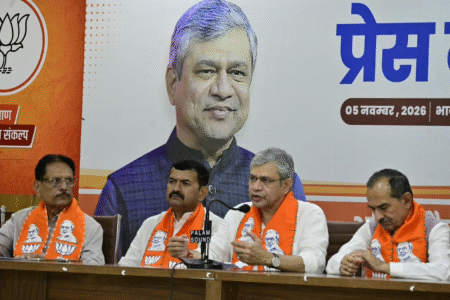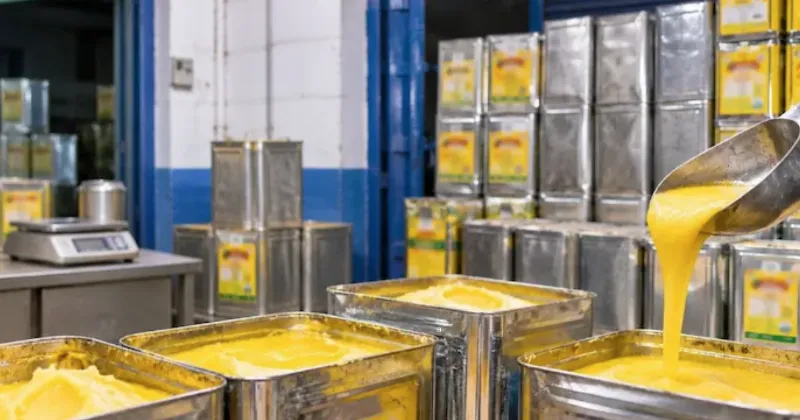
35,000 kg of suspected fake ghee seized in Jaipur; over 45,500 kg of contaminated and unfit food destroyed as authorities inspect 3,587 establishments across the state.
JAIPUR : As Rajasthan prepares for Diwali, a massive food safety crackdown has exposed the scale of suspected adulteration in the state’s festive food supply chain. Between October 13 and November 4, enforcement teams seized 1,55,980 kg of suspected food products and destroyed another 45,551 kg of contaminated or unfit material, according to figures released by the state Food Safety Department.
The numbers point to a disturbing challenge: ensuring that food reaching consumers’ homes is safe, particularly during a festival when demand for ghee, edible oil, dairy products, sweets and dry fruits surges.
Under the state government’s Shuddh Aahar–Milawat Par Waar campaign, special inspection teams examined 3,587 food establishments across Rajasthan. They collected 5,095 samples, comprising 3,112 statutory and 1,983 surveillance samples, and issued improvement notices to 237 businesses for violations of food safety standards.
Jaipur: Nearly 35 tonnes of suspected fake ghee seized
One of the largest seizures took place at Himalaya Dairy Products in Rampura Dabri, Jaipur, where authorities seized 34,795 kg of suspected counterfeit desi ghee.
Across other establishments in Jaipur, enforcement teams seized another 64,727 kg of suspected ghee, edible oil, beverages and spices, while 527 kg of material was destroyed.
The inspections also uncovered:
500 kg of substandard-quality paneer at Janta Dairy.
3,180 kg of spoiled raisins destroyed at a Jhotwara cold storage facility.
1,400 kg of unlabelled, rotten almonds and 1,018 kg of black pepper seized at a Sitapura cold storage facility.
Sri Ganganagar: ₹1.30 crore worth of suspected ghee seized
In Sri Ganganagar, a joint team of health officials and police raided two major warehouses and seized 20,655 litres of suspected adulterated desi ghee, estimated to be worth approximately ₹1.30 crore.
Three accused persons were arrested. Officials also seized ₹3.50 lakh in sales proceeds and a vehicle allegedly used for distribution.
Bhilwara and Beawar add to the statewide crackdown
In Bhilwara, authorities seized 12,630 kg of suspected food products and destroyed 5,107 kg of unfit material. The seized stock included 4,500 kg of spices and 3,180 kg of edible oil.
In Beawar, enforcement teams seized a combined 10,500 kg of material from Loonawat Trading Company, Sahu Traders and other establishments. Another 565 kg was destroyed.
Ghee and edible oil dominate seizure figures
The product-wise figures reveal the scale of the enforcement operation. Authorities seized 67,684 kg of ghee and destroyed 292 kg. Another 24,326 kg of edible oil was seized, while 9,683 kg was destroyed.
The department also seized 19,200 kg of beverage products. Meanwhile, 7,197 kg of mawa, paneer and other dairy products, 6,215 kg of sweets, 1,375 kg of spices, 855 kg of dry fruits and 1,765 kg of savoury snacks were destroyed.
The real test lies beyond the seizures
Food Safety Commissioner Avichal Chaturvedi said the department would not spare those compromising public health. All 5,095 collected samples have been sent to state central public health laboratories for testing.
Businesses found selling unsafe, substandard or mislabelled products will face action under the Food Safety and Standards Act, 2006. Possible penalties include financial sanctions, cancellation of licences and prosecution before the courts.
The special Diwali enforcement drive will continue until November 8.
But the larger question extends beyond the quantity seized: How much adulterated food may already have reached consumers before inspectors arrived?
Seizures and destroyed stock demonstrate enforcement activity, not necessarily the full extent of adulteration. Laboratory findings, prosecution outcomes and sustained inspections will ultimately determine whether this campaign delivers lasting consumer protection-or remains a seasonal crackdown.