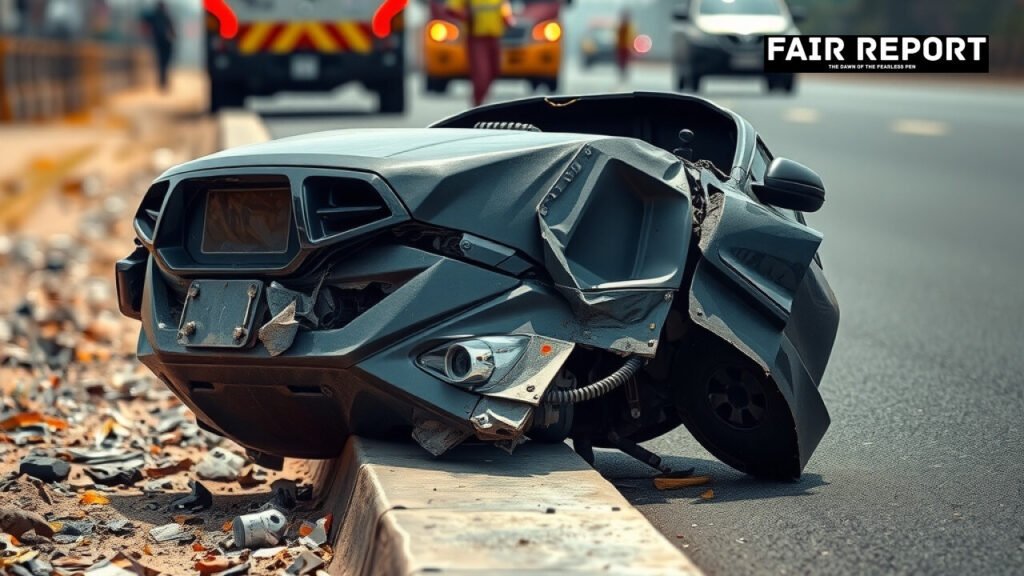
An Alwar expressway crash left three people dead after a speeding SUV ran over workers changing a tyre on the Delhi‑Mumbai Expressway in Nov 2026. The incident, reported by multiple local outlets, has raised fresh concerns about traffic safety on the high‑speed corridor.
Key takeaways
- Three fatalities and several injuries were reported.
- The victims were changing a tyre on the shoulder of the Delhi‑Mumbai Expressway.
- Police suspect the SUV was traveling well above the posted speed limit.
- Authorities have launched an investigation and called for stricter enforcement.
Details of the Alwar expressway crash
According to reports from The Hindu, Gallinews and The Hawk, a four‑wheel drive SUV approached the worksite at high speed and struck the three men who were attempting to replace a tyre on a stalled vehicle. The impact was severe, and the victims were pronounced dead at the scene. Two other workers sustained injuries and were taken to a nearby hospital.
Location and circumstances
The accident occurred near the town of Alwar in Rajasthan, a short distance from the Delhi‑Mumbai Expressway’s toll plaza. The expressway, a key artery linking the national capital with Mumbai, has a posted speed limit of 100 km/h for most sections. Witnesses say the SUV was traveling well above that limit, though exact speed figures have not been released.
| Parameter | Typical Value |
|---|---|
| Expressway speed limit | 100 km/h |
Emergency response
Rajasthan police arrived within minutes, cordoned off the area and began a preliminary investigation. Ambulances rushed the injured to Alwar’s district hospital, where they received emergency care. Police have detained the driver of the SUV for questioning, pending further forensic analysis.
Legal and safety implications
Road safety officials in Rajasthan have reiterated the dangers of speeding, especially on high‑speed corridors where roadside assistance work is common. The incident underscores the need for stricter enforcement of speed limits and better protection for workers on the shoulder of expressways. State authorities have announced that they will review existing protocols for roadside assistance, including mandatory use of high‑visibility clothing and temporary traffic control measures.
What drivers should do on the Delhi‑Mumbai Expressway
Motorists are urged to adhere to posted speed limits, keep a safe distance from roadside activities, and remain vigilant for any sudden obstacles. In case of an accident, drivers should immediately contact emergency services and avoid moving injured persons unless absolutely necessary. Experts also recommend that drivers reduce speed when approaching toll plazas or known work zones, as these areas often have reduced visibility and increased risk of unexpected hazards.
Broader context of expressway safety in India
India’s expressway network has expanded rapidly over the past decade, with the Delhi‑Mumbai Expressway being one of the flagship projects. While the new infrastructure has reduced travel times dramatically, it has also introduced new safety challenges. High design speeds mean that any loss of control can result in severe consequences, especially for workers who operate close to traffic flow. According to a 2025 Ministry of Road Transport and Highways report, expressway‑related fatalities have risen by 8% since the introduction of the nation’s first controlled‑access highways, prompting calls for more robust safety standards.
In addition to speed enforcement, technology is being explored as a mitigation tool. Intelligent transportation systems (ITS) that provide real‑time alerts to drivers about work zones, combined with automated speed‑limit enforcement cameras, have shown promise in other countries. Rajasthan’s transport department has indicated interest in piloting such systems on the Delhi‑Mumbai corridor within the next two years.
Community reaction and calls for action
The families of the victims have organized peaceful protests outside the Alwar police headquarters, demanding swift justice and compensation. Local NGOs have also highlighted the need for better training and equipment for roadside assistance crews, arguing that the current practices leave workers vulnerable to high‑speed traffic.
Social media users have used the hashtag #AlwarExpresswaySafety to share personal stories of near‑misses and to pressure authorities into taking concrete steps. The conversation has broadened to include discussions about driver education, the role of commercial vehicle operators, and the importance of regular safety audits for expressway projects.
Future investigations and expected outcomes
Authorities will continue to investigate the Alwar expressway crash, and a full report is expected in the coming weeks. The investigation will examine vehicle data, driver statements, and any available CCTV footage from nearby toll booths. Preliminary findings are likely to influence policy revisions, including possible reductions in the maximum permissible speed for certain vehicle categories and the introduction of mandatory stop‑signage at known work zones.
Until the final report is released, the tragedy serves as a stark reminder of the consequences of reckless driving on India’s expanding highway network. It also highlights the urgent need for a coordinated approach that combines enforcement, engineering, and education to protect both motorists and the essential workers who keep the nation’s roads moving.
FAQ
What caused the Alwar expressway crash?
A speeding SUV hit three workers who were changing a tyre on the Delhi‑Mumbai Expressway’s shoulder.
How many people died in the incident?
Three workers were killed at the scene.
Were any others injured?
Yes, two other workers were injured and taken to a hospital.
Has the driver been arrested?
The driver has been detained for questioning while the investigation continues.
What actions are being taken to prevent similar accidents?
Rajasthan officials are urging stricter speed enforcement and better safety measures for roadside workers.