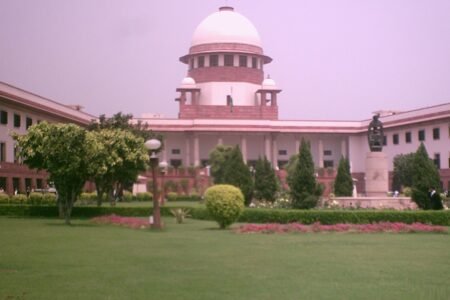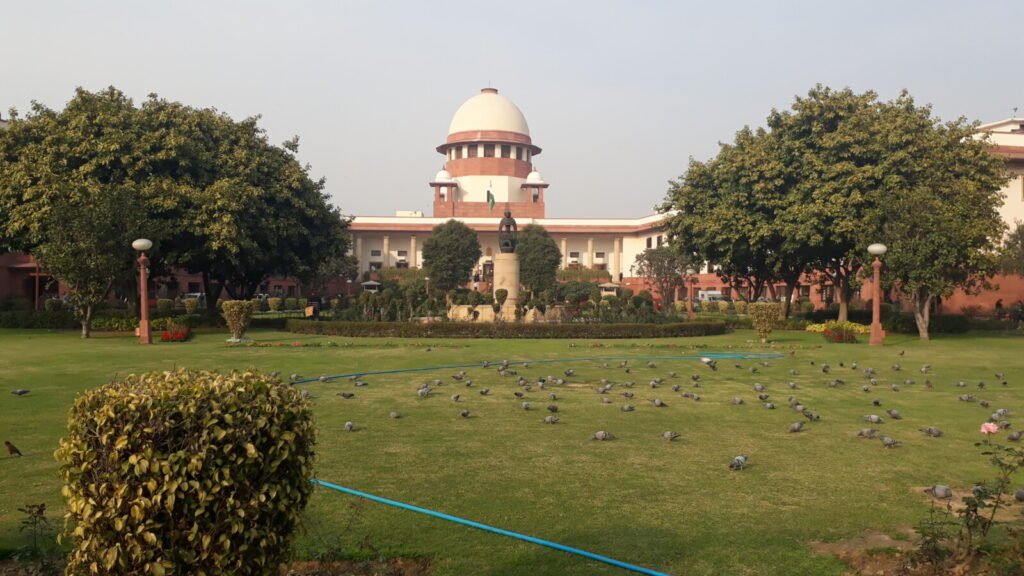
The Centre has issued a notification for the appointment of high court chief justices as judges of the Supreme Court. The appointment of high court chief justices adds three senior jurists to the apex bench, as reported by Hindustan Times and Verdictum on 5 October 2026.
Key takeaways
- Three high court chief justices will become Supreme Court judges.
- Appointments are made by the President of India under constitutional authority.
- The decision follows the standard high‑court judge appointment process.
Background of the appointment of high court chief justices
The notification came after the judiciary and the executive consulted each other. The research doesn’t name the three chief justices, but they’re expected to bring a lot of experience from their high courts. Such elevations follow Article 124 of the Constitution, which lets the President appoint Supreme Court judges after consulting senior judges.
Legal procedure for the appointment
The high court judge appointment process starts with a recommendation from the Collegium, a group of senior Supreme Court judges. The Ministry of Law and Justice then passes the recommendation to the President. Once the President signs the order, it appears in the Gazette of India.
Comparison of appointment steps
| Step | High Court Judge | Supreme Court Judge |
|---|---|---|
| Collegium recommendation | Chief Justice of India + senior judges | Chief Justice of India + senior judges |
| Government review | Ministry of Law & Justice | Ministry of Law & Justice |
| Presidential appointment | President of India | President of India |
Both appointments follow the same constitutional framework; the only difference is the court level involved.
Implications for the Supreme Court
Adding three chief justices should boost the bench’s ability to handle the growing case load. Their admin experience can also help run the court more efficiently. Observers say such moves often show confidence in the judges’ fairness and skill.
What happens next
After the Gazette notice, the new judges will take an oath before the President. Then they’ll start hearing cases and writing judgments. Lawyers should watch for any changes in how cases are assigned as the judges join different benches.
Historical precedents and the evolution of the appointment of high court chief justices
India’s judicial history records several instances where high court chief justices have been elevated to the Supreme Court. Since the establishment of the Supreme Court in 1950, more than fifty chief justices of various high courts have joined the apex court, bringing with them regional perspectives and administrative expertise. These precedents illustrate a consistent pattern: the elevation of senior high‑court leaders is viewed as a means to enrich the Supreme Court’s collective wisdom and to ensure a balanced representation of the nation’s diverse legal traditions.
Impact on jurisprudence and case management
The infusion of three new judges who have previously served as chief justices is expected to influence both substantive and procedural jurisprudence. Their prior experience in managing high‑court rosters, overseeing case flow, and implementing technology‑driven reforms can translate into more efficient docket management at the Supreme Court. Moreover, their judgments at the high‑court level often reflect a deep engagement with constitutional questions, which may shape future landmark decisions on fundamental rights, federalism, and administrative law.
Reactions from the legal community and the public
Legal scholars, bar associations, and civil‑society groups have largely welcomed the appointment of high court chief justices, citing the need for seasoned administrators on the Supreme Court bench. Commentators note that the move signals a continued commitment to merit‑based elevation, as opposed to purely political considerations. However, some critics argue that a broader pool of senior judges, including those who have not served as chief justices, should also be considered to enhance diversity of thought.
Significance of the appointment of high court chief justices
Beyond the immediate administrative benefits, the appointment of high court chief justices carries symbolic weight. It underscores the constitutional principle that the highest court draws its strength from the entire judicial hierarchy. By promoting leaders who have already demonstrated judicial acumen and managerial competence, the system reinforces public confidence in the impartiality and effectiveness of the judiciary.
Future outlook and potential reforms
Looking ahead, the government and the judiciary may explore refinements to the appointment process, such as greater transparency in Collegium deliberations or the inclusion of a broader set of stakeholders. The recent appointments could serve as a catalyst for discussions on how to balance experience, regional representation, and gender diversity among Supreme Court judges. As the new judges settle into their roles, their performance will likely inform future policy debates on judicial appointments.
In summary, the appointment of high court chief justices to the Supreme Court represents a strategic effort to blend seasoned judicial leadership with the constitutional mandate of a unified, independent judiciary. The coming months will reveal how these seasoned jurists shape the Court’s jurisprudence, case management, and overall institutional credibility.
FAQ
Who makes the final decision on Supreme Court appointments in India?
The President of India issues the final appointment order after consulting the Supreme Court Collegium and the Ministry of Law and Justice.
What is the role of the Collegium in the appointment process?
The Collegium, composed of senior Supreme Court judges, recommends names for elevation to the Supreme Court.
Will the three newly appointed judges need to take an oath?
Yes, each judge must take the oath of office before the President before assuming duties.
How does this appointment affect the high courts they leave?
Their vacancies will be filled through the regular high‑court judge appointment process, ensuring continuity.
Is there a limit to how many chief justices can be appointed at once?
There is no statutory limit; appointments are made as needed based on vacancies and the judiciary’s requirements.
Sources
- Hindustan Times: Centre notifies appointment of three high court chief justices as Supreme Court judges | India News
- Verdictum: Centre Notifies Elevation Of Chief Justices Of Three High Courts To Supreme Court
- Live Law: Centre Notifies Appointment Of Permanent Judges For Andhra Pradesh High Court
- Live Law: Centre Notifies Appointment Of Permanent Judges For Uttarakhand And Gauhati High Courts