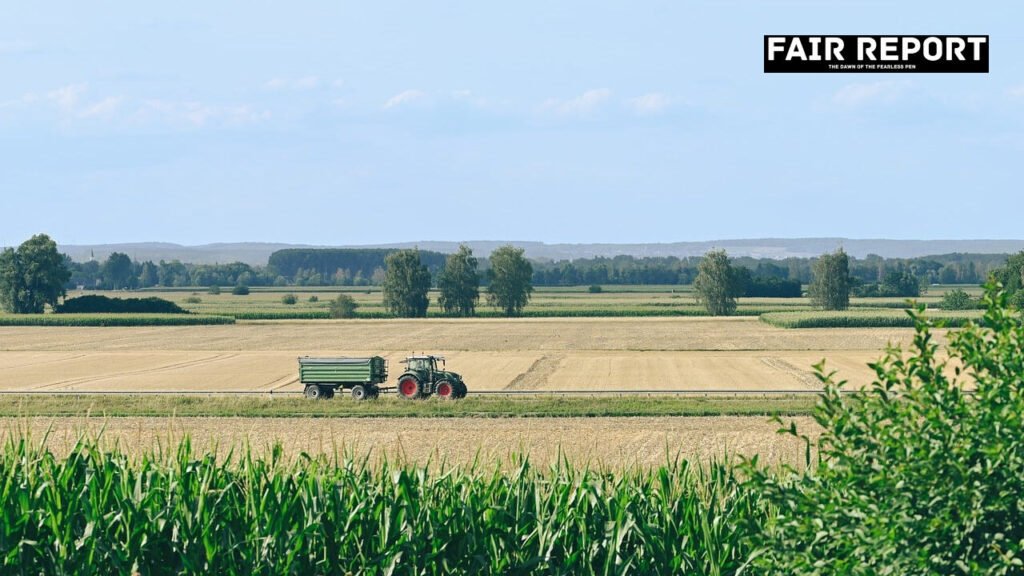
The central government has officially instructed five states to significantly ramp up their stubble-burning action as agricultural fires experience a sharp surge. Ministers emphasized the urgent need for a shift into mission mode to tackle the rising number of farm fires, particularly noting concerning spikes in Madhya Pradesh and Rajasthan.
Key takeaways
- The Centre urged five states to adopt mission mode against agricultural fires.
- A sharp surge in stubble-burning incidents was recorded in Madhya Pradesh and Rajasthan.
- Ministries advised state authorities to step up monitoring and repair idle equipment.
- Farmers must be provided with affordable alternatives to clearing fields by fire.
Urgent Push for Stubble-Burning Action
As autumn crop cycles progress, agricultural smoke management has once again taken center stage for environmental officials. According to reports from BW Businessworld and other outlets in October 2026, central authorities are pushing regional administrations to take immediate corrective measures. The recent data highlights an alarming increase in farm fires, prompting national leaders to demand strict enforcement and proactive management from local departments.
Ministers reviewed the current ground situation and laid out clear expectations for the administrative machinery. Rather than reacting after smoke blankets the region, authorities want preemptive steps taken to prevent farmers from resorting to open-field burning.
To ensure long-term environmental stability, continuous public awareness campaigns are being rolled out across rural districts. These initiatives educate agricultural communities about the hazardous health impacts of toxic smoke and the long-term degradation of soil nutrients caused by repeated fires. Experts emphasize that widespread behavioral changes are just as critical as regulatory enforcement.
Targeting States and Enhancing Monitoring
The directive targets five specific states, placing heavy emphasis on regions where monitoring has lagged or equipment has remained underutilized. State officials have been instructed to closely track hotspots using modern tracking tools and field inspections. Enhanced surveillance ensures that local districts can respond quickly when illegal burning attempts begin.
Furthermore, administrative teams must ensure that heavy machinery designated for residue management is fully operational. Many districts previously reported machinery sitting idle due to maintenance issues or lack of fuel coordination.
State-level task forces have also been established to coordinate responses across different administrative tiers. By bridging communication gaps between village councils, district collectors, and state environmental boards, the government hopes to streamline resource allocation and eliminate bureaucratic delays that previously hindered rapid response measures during peak burning windows.
| Focus Area | Action Required |
|---|---|
| Monitoring | Step up field surveillance and track hotspots |
| Equipment | Repair idle residue-management machinery |
| Alternatives | Offer affordable alternatives to farmers |
Supporting Farmers with Practical Alternatives
Punitive measures alone will not solve the persistent challenge of crop residue disposal. Recognizing this, the Centre has urged state officials to ensure that farmers have access to affordable alternatives. Subsidized machinery, efficient management of straw, and better institutional support are critical to making sustainable farming practices viable for smallholders.
Without accessible financial and technical support, rural communities often find open burning to be the most cost-effective way to clear fields for the next planting season. Providing workable solutions remains the cornerstone of the government’s current strategy.
Financial incentives are increasingly being integrated into agricultural subsidy programs to reward villages that successfully maintain zero-burn records. Agricultural economists point out that positive reinforcement, combined with robust technical assistance, creates a cooperative environment where farming communities feel valued rather than penalized by environmental regulations.
Next Steps for Regional Administrations
As state governments receive these directives, local agricultural departments must translate central guidelines into grassroots action. Farmers and district officers should coordinate closely to ensure that machinery reaches the field on time and monitoring protocols are strictly followed in the coming weeks.
Ultimately, sustained collaboration between local stakeholders, agricultural universities, and central ministries will determine the success of these comprehensive mitigation efforts moving forward.
Frequently Asked Questions
Which states are affected by the surge in farm fires?
The recent surge in stubble burning has been particularly notable in Madhya Pradesh and Rajasthan, prompting a directive to five states in total.
What specific actions has the Centre requested?
The Centre has urged states to go into mission mode, step up field monitoring, repair idle machinery, and offer affordable alternatives to farmers.
Why is stubble burning a major concern?
Open-field burning of crop residue significantly contributes to air pollution and regional smog during the post-harvest season.
Sources
- BW Businessworld: Centre Asks Five States To Step Up Stubble-Burning Action As Cases Surge In MP, Rajasthan
- The Times of India: Centre asks states to go into ‘mission mode’ to curb stubble burning as farm fires rise in MP, Rajasthan
- Daily Excelsior: Centre asks 5 states to go on mission mode against stubble burning as MP, Rajasthan cases surge
- India TV News: Centre asks five states to go on 'mission mode' against stubble burning as cases in MP, Rajasthan surge