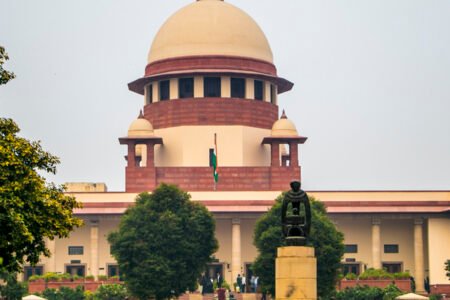
The Delhi High Court has upheld the central government’s decision to deny entry to an Indian-origin US citizen who was previously convicted as a sex offender. In its judgment, the court emphasized that the petitioner’s Delhi High Court visa application was rightfully rejected due to the gravity of his past offenses and his active suppression of material facts. The ruling aligns with India’s stringent immigration policies regarding individuals with criminal records.
Key Takeaways
- The Delhi High Court upheld the denial of a entry visa to an Indian-origin US citizen.
- The petitioner is a convicted sex offender who suppressed this information during his application.
- The court cited an earlier Gujarat High Court ruling to support the government’s sovereign right to deny entry.
- The decision reinforces that foreign nationals do not have an absolute right to enter India.
The Background of the Delhi High Court Visa Case
The petitioner, an Indian-origin individual who holds United States citizenship, had approached the court challenging the government’s refusal to grant him entry into India. The legal battle over his Delhi High Court visa plea revealed that he had been convicted of a sex offense in the United States. Upon reviewing the case details, the court found that the petitioner had intentionally concealed his criminal history when applying for travel authorization.
Government counsel argued that the state must maintain strict control over who crosses its borders, especially when public safety is at risk. The petitioner’s defense attempted to downplay the past conviction, but the court remained firm on the necessity of thorough background disclosures.
Suppression of Facts and Legal Consequences
Under Indian immigration laws, applicants are required to disclose any prior criminal convictions. The court noted that the petitioner’s failure to mention his status as a registered sex offender constituted a serious suppression of facts. According to the ruling, foreign nationals do not possess an absolute right to enter India, and providing false or incomplete information is grounds for immediate visa refusal.
By hiding his criminal past, the applicant compromised the integrity of the visa evaluation process. The court highlighted that transparency is a non-negotiable prerequisite for international travelers seeking entry into the country.
Citing the Gujarat High Court Precedent
In delivering its verdict, the bench drew upon an earlier Gujarat High Court ruling that dealt with similar circumstances. That precedent established that individuals convicted of serious crimes, particularly sexual offenses, pose a potential threat to public safety and order. By relying on this prior judgment, the Delhi High Court reinforced the legal standard that criminal history, combined with dishonesty in application forms, justifies a flat denial of entry.
The reliance on the Gujarat High Court precedent shows a consistent judicial approach across different states in India regarding immigration security. Courts consistently prioritize public safety over individual convenience in cases involving severe criminal records.
| Legal Grounds for Denial | Details in Current Case | Legal Impact |
|---|---|---|
| Criminal Conviction | Petitioner convicted as a sex offender in the US | Fails public safety and character requirements |
| Suppression of Facts | Failed to disclose the US conviction on visa documents | Leads to automatic disqualification and loss of credibility |
Sovereignty and Public Safety in Immigration
The decision highlights the broad discretionary powers held by the Indian government regarding immigration and national security. The court reiterated that granting a visa is a sovereign right of the state rather than a vested right of an alien. When an applicant is classified as a sex offender, the state’s duty to protect its citizens outweighs any personal or familial reasons the applicant might have for visiting the country.
Implications for Future Visa Applicants
This ruling serves as a clear warning to foreign citizens of Indian origin and other international travelers seeking to visit the country. The decision underscores the necessity of absolute transparency during the visa application process. Any attempt to hide criminal records, especially those involving sexual offenses, will likely result in a permanent bar from entering India, as supported by this latest Delhi High Court visa precedent.
Moving forward, travelers must ensure that all application forms are filled out with complete honesty. The Indian government continues to upgrade its database systems to cross-verify international criminal records, making suppression of facts an ineffective and highly risky strategy.
Frequently Asked Questions
Why did the Delhi High Court uphold the visa denial?
The court upheld the denial because the applicant, an Indian-origin US citizen, was a convicted sex offender and had actively suppressed this information on his visa application.
What precedent did the court cite in its decision?
The Delhi High Court cited an earlier Gujarat High Court ruling which established that individuals with serious criminal records, particularly sexual offenses, can be denied entry to protect public safety.
Is getting an Indian visa a legal right for foreign citizens?
No, the court reiterated that granting a visa is a sovereign right of the state and not an absolute right of any foreign national.