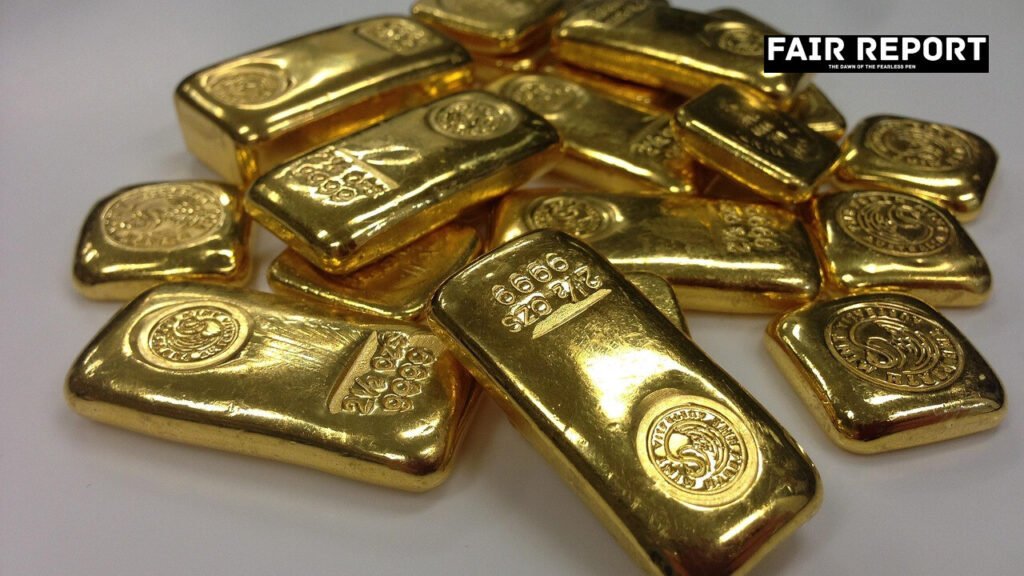
Domestic gold and silver prices are expected to trade within a relatively narrow range with a slight positive bias in the coming week, according to market analysts. A depreciating Indian rupee continues to offer critical support, cushioning local commodity quotes from fluctuations in the international market. For a broader understanding of market trends, you can read more about general market trends and how macroeconomic factors influence precious metals.
Key Takeaways
- Analysts expect precious metal valuations in India to hold range-bound with a mild upward bias.
- Weakness in the Indian rupee provides a price floor for domestic bullion against international market corrections.
- Overseas commodity sentiment and foreign exchange movements will dictate short-term momentum.
- Domestic physical demand and exchange-traded contracts reflect steady hedging behaviour.
How Rupee Weakness Supports Precious Metals
India fulfills nearly all of its domestic precious metal demand through imports. Because international bullion contracts are settled in US dollars, any depreciation of the Indian rupee against the greenback directly elevates the landed cost of these imports. Consequently, even when global benchmarks pull back, domestic quotes on the Multi Commodity Exchange (MCX) often remain resilient.
According to market analysts cited by Press Trust of India from New Delhi, this currency mechanism acts as an effective buffer. While overseas investors may see price corrections, Indian market participants experience a more stable pricing environment due to the currency exchange differential.
Global Signals Versus Local Market Dynamics
International bullion prices remain sensitive to major macroeconomic indicators, including US Treasury yields, central bank rate projections, and broader geopolitical developments. Overseas trading sessions have witnessed periodic volatility as traders adjust their expectations regarding monetary policy and global economic stability. To explore historical data on these shifts, check out our guide on historical bullion data.
Despite these international swings, the domestic bullion market tends to decouple slightly during periods of persistent rupee softness. When overseas prices edge lower, the domestic price drop is often tempered, keeping market quotes within a predictable band rather than triggering sharp domestic sell-offs.
| Market Variable | Trend Direction | Impact on Domestic Bullion |
|---|---|---|
| Indian Rupee (USD/INR) | Weakening bias | Raises landed cost; cushions domestic downside |
| International Spot Prices | Fluctuating | Creates directional resistance at upper bounds |
| Domestic Physical Demand | Stable to selective | Provides baseline volume support for retail markets |
Range-Bound Expectations for Traders
Market analysts note that the balance between global macroeconomic resistance and local currency support creates ideal conditions for sideways trading. Rather than aggressive rallies or steep declines, domestic precious metals are expected to test intermediate support levels while maintaining a mild upward lean.
For traders watching the market, range-bound environments require strict risk management. Short-term contracts may see alternating sessions of buying and profit-taking without establishing a sustained multi-week breakout in either direction.
Key Factors to Monitor in the Coming Sessions
Market participants should closely track the performance of the US dollar index and movements in the USD/INR currency pair over the coming week. Any sudden intervention or recovery in mauslms or the rupee could remove part of the cushion currently supporting domestic metals. Investors looking to diversify their portfolios should also review our investment strategies section for comprehensive portfolio management tips.
Additionally, physical jewellery hubs and industrial silver consumers are watching wholesale pricing cues closely. Until global monetary directions provide clearer cues, range-bound positioning remains the prevailing consensus across Indian commodity desks.
Understanding the Broader Economic Impact
The interplay between currency depreciation and local commodity values is a fascinating study in modern economics. When local currency loses ground against the dominant global reserve currency, imported inflation becomes a primary concern for policymakers. For precious metals, this dynamic means that retail consumers in developing nations often face higher baseline costs even when London or New York spot benchmarks experience downward pressure. This decoupling effect underscores why regional analysis is just as crucial as watching global tickers.
Furthermore, seasonal demand plays an integral role in shaping local market resilience. Weddings, festivals, and traditional gifting seasons often coincide with periods of high macroeconomic uncertainty, reinforcing a solid physical floor beneath retail bullion. Commercial entities, refineries, and jewellery manufacturers continuously monitor these seasonal triggers to optimize their procurement schedules throughout the fiscal year.
The Role of Central Bank Reserves and Monetary Policy
Central banks around the globe continue to adjust their monetary frameworks in response to persistent inflation and shifting employment figures. As monetary authorities deliberate on interest rate cuts or prolonged pauses, institutional investors reallocate capital between fixed-income assets, equities, and alternative safe-haven assets. These capital flows directly impact exchange-traded funds (ETFs) and wholesale vault inventories.
Retail participants frequently underestimate the influence of institutional positioning on everyday retail quotes. When large funds execute massive hedging strategies or rebalance their portfolios, the resulting liquidity shifts can trigger rapid intraday price swings. Maintaining a disciplined trading plan helps retail investors navigate these sudden spikes without succumbing to emotional decision-making. Staying informed through reliable financial news portals and analytical commentaries remains the best defense against short-term market noise.
Frequently Asked Questions
Why does a weak rupee help domestic gold and silver prices?
Because India imports most of its gold and silver in US dollars, a weaker rupee makes those imports more expensive in local currency, creating a floor under domestic market prices.
What does a range-bound week mean for bullion investors?
A range-bound week means prices are projected to fluctuate between specific upper and lower technical boundaries rather than experiencing a sharp upward breakout or steep decline.
What external factors could break the range-bound trend?
Sharp shifts in the US dollar index, unexpected central bank rate announcements, or sudden swings in the USD/INR exchange rate could push prices outside their current trading band.