









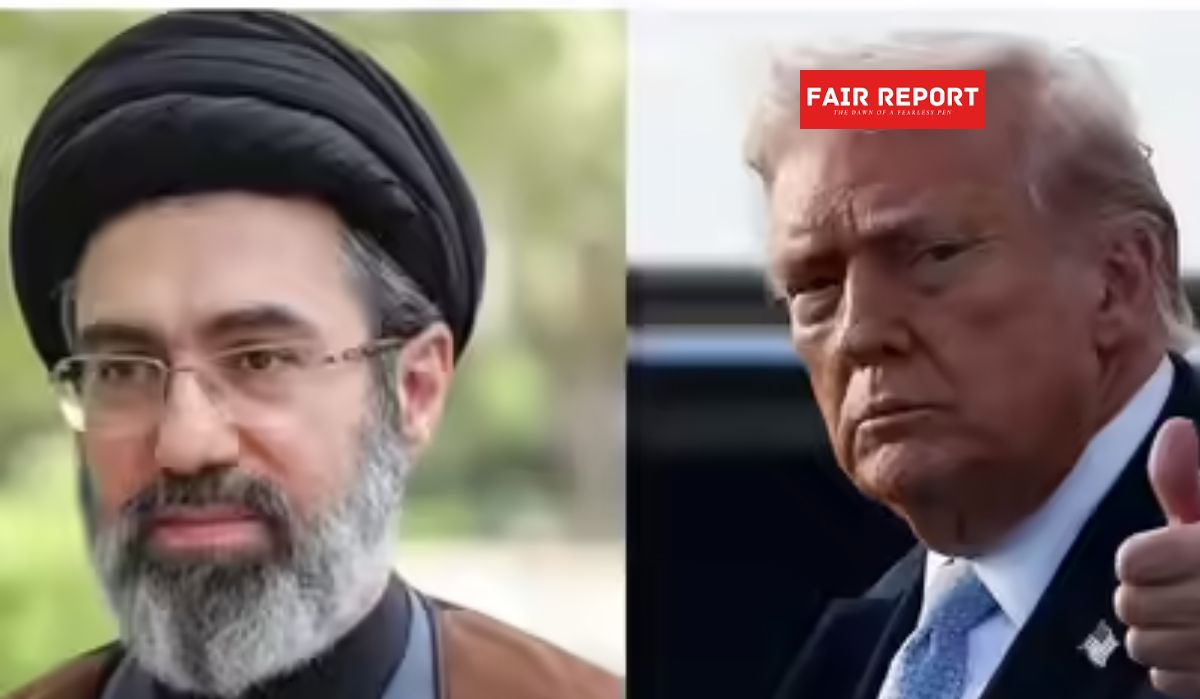
Iran US tensions: Tensions between Donald Trump and Iran escalated sharply after Tehran issued its first response to a 48-hour ultimatum delivered by the US president. The warning, which demanded progress toward a peace deal or the reopening of the strategically critical Strait of Hormuz, (Iran US tensions)has triggered a fierce war of words between the two sides.
Iran’s central military command, Khatam al-Anbiya Central Headquarters, dismissed Trump’s threat as a “helpless, nervous, unbalanced and stupid action.” Senior commander Ali Abdollahi Aliabadi warned that any escalation would have severe consequences, stating that the “gates of hell will open” if hostilities intensify.
Echoing that tone, spokesperson Ebrahim Zolfaghari cautioned that a broader conflict would engulf the entire region. He said the idea of defeating Iran was an illusion that could backfire disastrously, turning into what he described as a “swamp” for its adversaries.
Adding to the tension, an Iranian security official cited by Fars News Agency claimed that Tehran has identified specific targets and hinted at a “big surprise” for both the United States and Israel. The official dismissed Trump’s threat to strike infrastructure as “laughable,” suggesting Iran could shift the timing of its response strategically.
Trump’s ultimatum, posted on his social media platform Truth Social, reiterated an earlier 10-day deadline for Iran to reach a deal. In his message, Trump warned that failure to comply within 48 hours would result in severe consequences, declaring that “all hell will rain down” if demands are not met.
The US president had earlier indicated a temporary pause in strikes targeting Iran’s energy infrastructure, extending it until April 6, 2026, to allow space for diplomatic negotiations. He also claimed that the move followed a request from Tehran and that talks were progressing positively—an assertion that now appears at odds with the latest developments.
The sharp exchange highlights the fragile state of US-Iran relations, with rising fears that miscalculation or further escalation could destabilize the broader Middle East. With both sides issuing strong rhetoric and signaling readiness, the coming days could prove critical in determining whether tensions de-escalate—or spiral into a wider conflict.