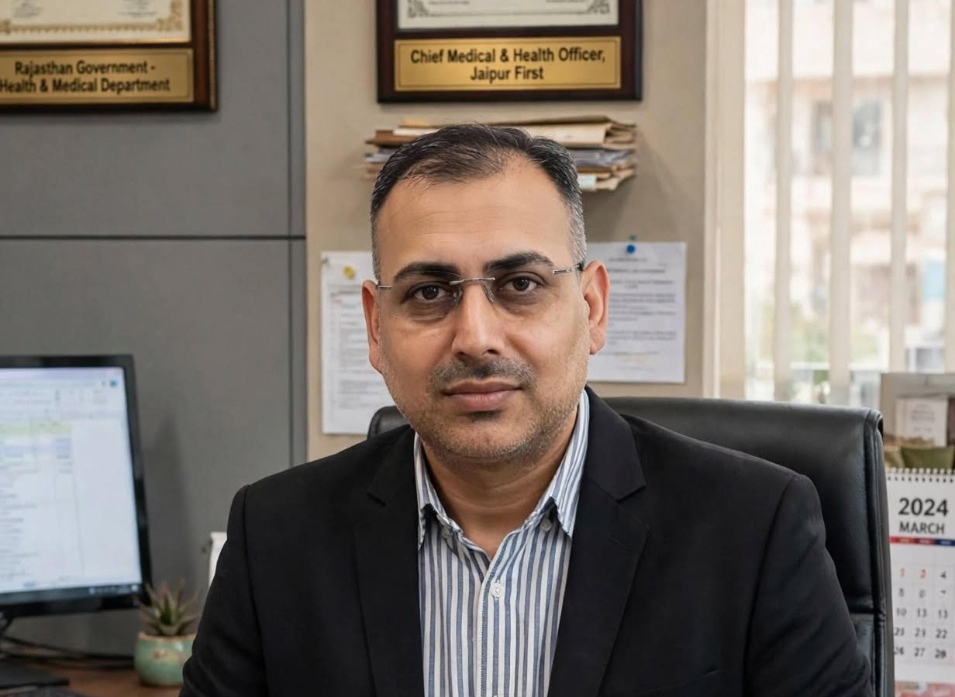
In conversation with CMHO-1 Dr Ravi Shekhawat: How administrative commitment, scientific awareness and accessible healthcare are strengthening the fight against cervical cancer.
JAIPUR: The success of a public health campaign is not measured by the number of announcements it generates, but by the lives it protects. Jaipur-1’s reported achievement of 86 per cent of its HPV vaccination target marks an encouraging milestone in India’s fight against cervical cancer. Yet, the remaining gap raises an equally important question: how does the health administration ensure that no eligible girl is left behind?
In an interaction with Chief Medical and Health Officer (CMHO-1) Dr Ravi Shekhawat, the focus was on translating scientific evidence into public awareness and, ultimately, effective healthcare delivery.
Launched nationally on February 28, 2026, the Government of India’s HPV vaccination campaign provides free, voluntary vaccination to eligible 14-year-old girls, subject to parental consent. The programme uses a single dose of the quadrivalent Gardasil-4 vaccine, which protects against four human papillomavirus (HPV) types—6, 11, 16 and 18. Types 16 and 18 are responsible for a substantial proportion of cervical cancer cases.
In Jaipur-1, the reported 85 per cent coverage reflects the importance of effective local implementation. According to information shared by the CMHO’s office, vaccination services are being delivered through government hospitals, community health centres and primary health centres.
However, vaccine availability alone cannot guarantee success. Misinformation, parental hesitation and unfounded fears about infertility continue to threaten public participation. There is no credible scientific evidence that HPV vaccination causes infertility. The vaccine is a preventive intervention against HPV infections that can lead to cervical cancer.
This is where the responsibility extends beyond the health department. Doctors, educators, community leaders, social organisations and responsible media must work together to counter misinformation with scientific facts. No girl should be denied access to preventive healthcare because of rumours, prejudice or a lack of awareness.
The remaining 15 per cent deserves as much administrative attention as the achievement already recorded. Identifying missed beneficiaries, engaging hesitant parents and ensuring convenient access must remain priorities.
Dr Shekhawat’s interaction highlights a fundamental principle of public health administration: awareness must translate into access, and access must translate into protection.
The real success of this campaign will not be measured by the percentage achieved today, but by the lives protected and the cervical cancer cases prevented tomorrow.