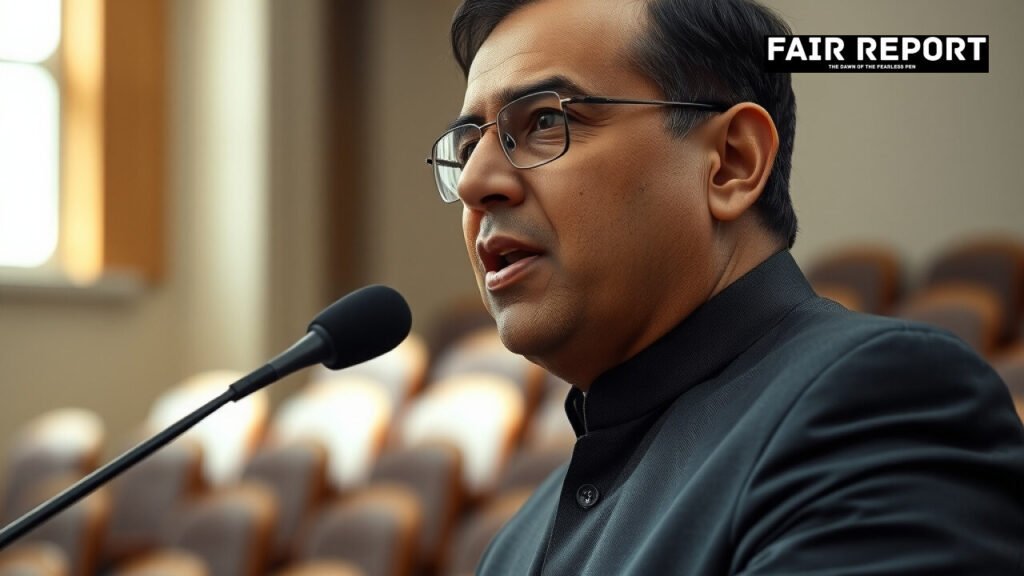
Vijayendra Singh of the Bharatiya Janata Party (BJP) has linked the recent price rise Karnataka is experiencing to the Congress party’s policies. In a televised interview he warned that the NDA will soon return to power in the state.
Key takeaways
- Vijayendra blames Congress for rising commodity prices in Karnataka.
- The BJP claims the price rise is a political issue, not an economic one.
- Congress has responded by accusing the BJP of misleading voters.
- Both parties see the issue as a litmus test ahead of upcoming state elections.
Background to the price rise Karnataka
Over the past month, staple items such as onions, pulses and diesel have seen noticeable price hikes across Karnataka. Observers note that supply‑chain disruptions and seasonal factors have contributed to the surge, and that inflation is becoming a prominent election issue.
Vijayendra’s accusations
Vijayendra Singh asserted that the Congress is deliberately creating an environment of hardship to undermine the current government. He said the party’s “misleading narratives” are designed to sway voters ahead of the next assembly poll.
Congress response
The Congress party rejected the BJP’s charge, calling it “political theatrics.” Party spokespersons reminded the public that the price rise is a nationwide phenomenon, not a state‑specific failure.
Political implications for Karnataka
Both parties are using the price‑rise debate to rally their bases. The BJP believes that highlighting economic distress will help the NDA regain a foothold after its recent defeat in the state. Conversely, the Congress hopes to portray the BJP as out‑of‑touch with everyday hardships.
What lies ahead
With the Karnataka assembly elections slated for early next year, the price rise Karnataka story is likely to dominate campaign rallies and media debates. Voters will watch closely to see whether the BJP’s narrative gains traction or if the Congress can shift the focus back to broader economic policies.
For residents, keeping an eye on official price‑watch portals and local market trends can help navigate the short‑term impact of rising costs.
Economic factors behind the price rise Karnataka
Beyond supply‑chain hiccups, several macro‑economic variables are feeding the price rise Karnataka. Global commodity prices have climbed due to heightened demand post‑pandemic, while the Indian rupee’s modest depreciation adds pressure on import‑dependent goods. Additionally, monsoon variability has affected agricultural output, tightening supplies of vegetables and pulses that form a large part of household expenditure.
Impact on households
Low‑ and middle‑income families feel the brunt of the price rise Karnataka most acutely. A typical household budget allocates around 30 % to food; even a 5 % increase in staple prices can erode savings and push vulnerable groups toward debt. Rural consumers, who rely heavily on local markets, report longer queues and reduced purchasing power, prompting many to shift to cheaper alternatives.
Political strategies and voter sentiment
The BJP is framing the price rise Karnataka as a failure of the opposition to manage the economy, while the Congress emphasizes that inflation is a national challenge beyond any single state’s control. Surveys conducted by local think‑tanks indicate that 48 % of voters consider price stability a top priority, making the narrative a decisive factor in upcoming electoral calculations.
Expert opinions and data sources
Economists from the Karnataka State Planning Board point to a combination of fiscal deficits and rising input costs as drivers of the price rise Karnataka. For a detailed analysis, see the recent report by The Hindu, which provides month‑by‑month price indices and expert commentary.
Future outlook
Analysts project that if supply‑chain bottlenecks ease and monsoon conditions improve, the price rise Karnataka could moderate by late 2025. However, political rhetoric is likely to keep the issue in the public eye, especially as parties gear up for the state elections. Monitoring policy measures such as targeted subsidies and price‑control mechanisms will be essential for assessing the long‑term trajectory.
FAQ
Why is the price rise Karnataka becoming a political issue?
Both the BJP and Congress see the surge in commodity prices as a way to critique each other's governance ahead of state elections.
What has Vijayendra Singh specifically accused the Congress of?
He claims the Congress is misleading people about the reasons behind the price rise and using it to gain electoral advantage.
How has the Congress responded to the BJP’s allegations?
The party says the accusations are political theatrics and points out that price hikes are a national trend, not limited to Karnataka.
When are the next Karnataka state elections scheduled?
The assembly elections are expected to be held early next year, though an exact date has not been announced.
What can consumers do amid the price rise Karnataka?
Monitoring official price‑watch sites and comparing local market rates can help shoppers manage their budgets.