JAIPUR, November 26, 2026: In a significant step towards resolving a long-standing boundary dispute between Rajasthan and Madhya Pradesh, the Chief Secretaries of the two states have agreed that the matter will be settled strictly in accordance with the recommendations of the Central Empowered Committee (CEC) and the directions of the Supreme Court.
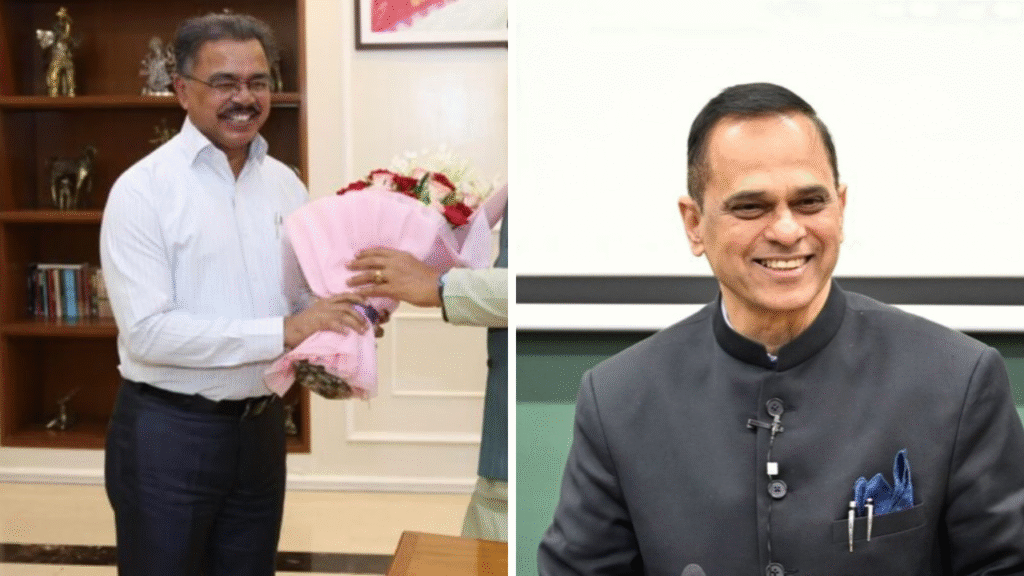
The consensus emerged during a video conference held on Thursday between Rajasthan Chief Secretary V. Srinivas and his Madhya Pradesh counterpart, Ashok Varnwal. The meeting focused on the disputed border area adjoining Madhya Pradesh’s Mandsaur district and Rajasthan’s Jhalawar district.
Emphasising the importance of a legally sustainable resolution, Rajasthan Chief Secretary V. Srinivas pointed out that, according to the Parivesh portal developed by the Government of India, the disputed tract is classified as forest land. He maintained that the dispute should be examined on the basis of documentary evidence and relevant records, with its resolution guided by the Supreme Court and the CEC constituted by the Court.
The approach signals an emphasis on institutional authority, documentary verification and adherence to the established legal framework rather than allowing an inter-state disagreement to escalate into an administrative or political confrontation.
Srinivas also underlined the need to safeguard the social and economic interests of stakeholders on both sides of the border. He stressed that any eventual resolution must take into account the concerns of affected communities while preserving cordial relations and constructive coordination between the two neighbouring states.
Both Chief Secretaries presented their respective positions during the interaction and concurred that the matter would be resolved in accordance with due procedure, the CEC’s recommendations and the Supreme Court’s decision.
A Framework Rooted in Law, Not Administrative Expediency
The significance of the meeting lies in the two states’ willingness to place the resolution of a sensitive territorial issue within the framework of judicial oversight. By agreeing to follow the Supreme Court’s determination and the CEC’s recommendations, Rajasthan and Madhya Pradesh have reaffirmed the importance of legal processes, inter-governmental cooperation and institutional accountability.