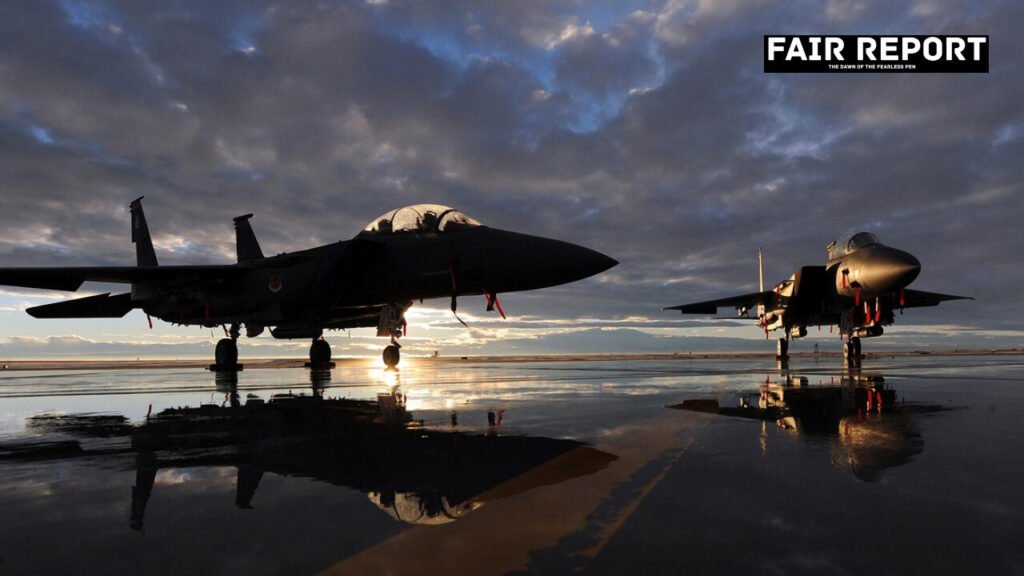
European Air Chiefs participating in the multinational Tarang Shakti exercise in Jodhpur have commended the Indian Air Force for establishing seamless operational alignment with international forces. Visiting military leaders observed that flying operations across Rajasthan’s desert terrain followed the exact standardized tactical protocols practiced back home in Europe, demonstrating an exceptional degree of interoperability and procedural alignment during high-tempo air combat missions.
Key Takeaways
- European Air Chiefs highlighted identical operating protocols between domestic bases and Indian deployment locations.
- The multinational drills took place over the desert sector of Jodhpur in Rajasthan.
- Standardised combat procedures enabled rapid tactical coordination among participating air arms.
- The exercise demonstrates the Indian Air Force’s growing capacity to host complex, large-force joint aerial maneuvers.
- Ground crews and mission controllers established unified maintenance and command-and-control workflows.
Shared Protocols at the Tarang Shakti Exercise
Operating high-performance fighter aircraft in contested scenarios demands rigid tactical discipline and unified communication formats. During the Tarang Shakti exercise, visiting European commanders noted that their flight crews encountered zero procedural friction when planning and executing missions alongside Indian pilots. Every phase of flight, from mission planning to live tactical execution, mirrored the operating philosophies used by allied air wings across the globe.
Standard combat procedures formed the bedrock of the combined flights. Tactical briefings, airspace deconfliction, rules of engagement, and air combat debriefings matched the criteria routinely used within Western defense alliances, demonstrating the Indian Air Force’s institutional alignment with global best practices. Flight leads from different nations were able to alternate command roles effortlessly, proving that common tactical doctrines overcome geographic and organizational differences.
Tactical Synergy over Rajasthan’s Skies
Hosting multinational aerial war games in Jodhpur offers distinct tactical advantages, including expansive desert ranges and demanding environmental parameters. European commanders observed that operating over the Thar Desert tested pilot endurance, sensor performance, and logistics resilience in high ambient temperatures. The clear desert skies provided an ideal backdrop for large-force employments requiring intricate radar coordination and supersonic maneuvers.
Rather than struggling with disparate methods, participating contingents synchronized their operational tasking rapidly. Joint packages involving electronic warfare, defensive counter-air patrols, and offensive strikes were structured and launched using common mission formats. Aviators engaged in simulated beyond-visual-range combat, visual dogfighting, and tactical surface strikes, adjusting their flight envelopes to match the realistic scenarios set forth by exercise planners.
| Operational Dimension | Tarang Shakti Execution | Strategic Objective |
|---|---|---|
| Tactical Protocols | Standardised combat procedures | Zero-latency mission integration |
| Geographic Theater | Jodhpur sector, Rajasthan | Realistic desert warfare training |
| Interoperability Focus | Multilateral flight packages | Seamless joint mission execution |
| Logistics & Support | Combined base infrastructure | Rapid turnaround and joint servicing |
Building Interoperability Across Modern Fleets
Modern air forces depend heavily on data links, compatible tactical language, and uniform safety envelopes to avoid friendly-fire incidents during high-speed, beyond-visual-range engagements. The integration witnessed throughout the Tarang Shakti exercise proved that Indian and European flight assets can operate together without extensive prior adjustments. Crews shared common mission objectives and relied on standardized terminology to exchange vital threat data in real time.
The exercises brought diverse aircraft types into unified formations, allowing pilots to explore the strengths and mission profiles of multiple platforms. Ground control intercept units and airborne surveillance coordinators directed multiple flights simultaneously, keeping allied crews on identical mission timelines and combat rhythms. These coordinated maneuvers proved that modern sensor fusion and standard tactical calls can bridge differences between distinct hardware architectures.
Ground Support and Turnaround Coordination
Aerial success in complex exercises relies heavily on the ground infrastructure that supports aircraft between sorties. Ground handling routines during the Tarang Shakti exercise demonstrated how closely Indian and European maintenance philosophies align. Technicians and armament specialists worked within combined service bays, managing flight turnarounds, technical inspections, and mission-essential refueling under stringent timelines.
The desert heat in Jodhpur required disciplined logistics management to preserve high sortie generation rates. Ground support personnel shared best practices for managing avionics cooling, structural safety checks, and weapons configuration. This ground-level coordination ensured that flight packages remained on schedule, reinforcing that operational synergy extends well beyond the cockpit into flight-line logistics and operational engineering.
Command, Control, and Debriefing Standards
Another focal point praised by visiting commanders was the meticulous debriefing culture established during the war games. Effective air combat tactics require rigorous post-flight analysis where aircrew review flight telemetry, weapon employment zones, and tactical decision-making without institutional bias. Every engagement was analyzed through digital reconstruction tools that accurately modeled missile trajectories, radar signatures, and electronic countermeasures.
This unified review process allowed pilots from all participating units in the Tarang Shakti exercise to glean immediate tactical lessons and refine their approaches for successive mission cycles. The objective, data-driven debriefs mirrored the highest international training standards, fostering mutual trust and professional camaraderie among aircrews from diverse military traditions.
Implications for Future Multi-Domain Cooperation
The positive feedback from European commanders validates India’s capacity to orchestrate massive aerial drills involving diverse international doctrines. As air forces around the globe seek flexible partnerships through joint military exercises, shared tactical standards ensure that forces can assemble and act collectively on short notice. The experience gained during these intensive maneuvers reinforces the principle that procedural standardisation is the true catalyst of effective coalition operations.
Participating air forces plan to incorporate the insights gathered during these multilateral engagements into future bilateral and multilateral drills. The operational data generated at Jodhpur establishes a clear benchmark for future cooperative exercises, joint maintenance practices, and tactical pilot exchange programs across partner fleets. By validating common operating standards, the culmination of the Tarang Shakti exercise marks an important milestone in modern aerial partnership and multilateral mission readiness.
Frequently Asked Questions
What is the Tarang Shakti exercise?
It is a major multinational air combat exercise hosted by the Indian Air Force to enhance tactical coordination, joint doctrine, and interoperability with friendly international air forces.
Where did the European Air Chiefs observe the exercise?
They observed the drills in Jodhpur, Rajasthan, where operations took place over the region's vast desert flight corridors.
Why were European commanders impressed by the Indian deployment?
They noted that combat operating procedures and tactical protocols in India matched the standards they use at home, enabling seamless mission execution.