





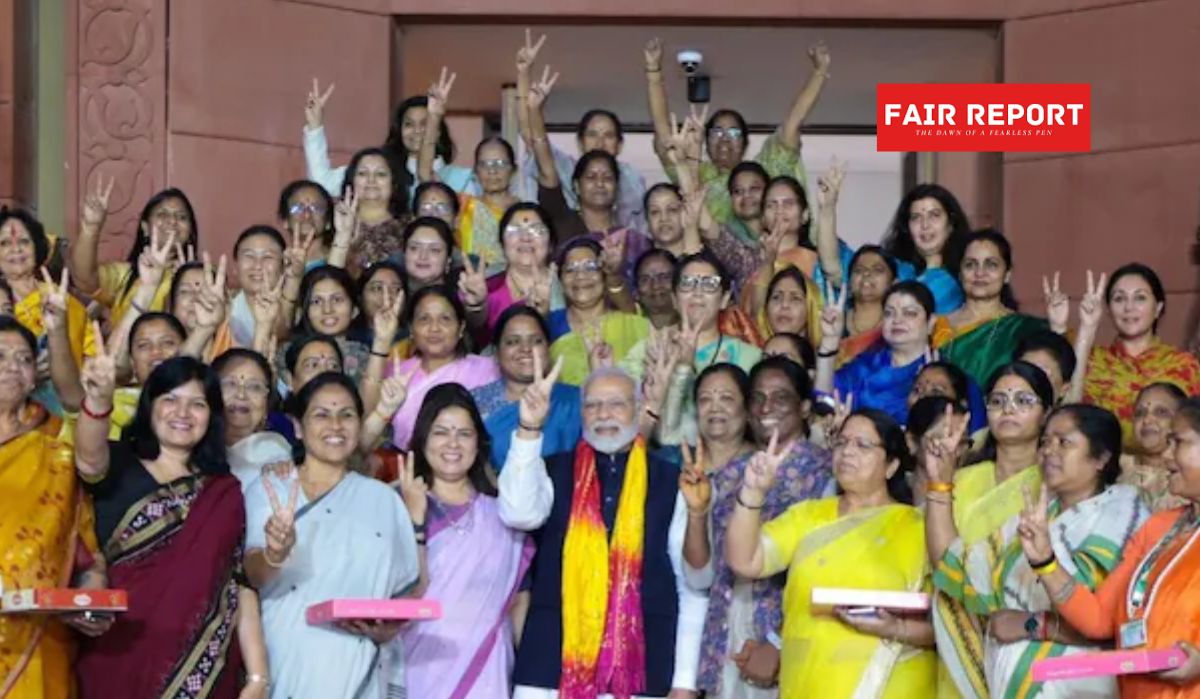
Women’s Reservation: Women’s reservation, a long-standing topic of debate in national politics, may now be implemented ahead of schedule. The central government is preparing to implement this system as early as the 2029 Lok Sabha elections. To this end, the possibility of amending the law passed in 2023 is being explored. Previously, it was believed that women’s reservation would be implemented after the 2034 general elections, but now the government appears to be in favor of implementing it as early as the next Lok Sabha elections.
According to sources, the government is trying to build consensus (Women’s Reservation)among opposition parties before finalizing this proposal. It is likely that the amendment bill will first be presented before the Union Cabinet and, after receiving approval, will be introduced in both houses of Parliament. The government intends to implement women’s reservation as early as the 2029 elections, based on the 2011 census. If this happens, the entire mathematics of seats in the Lok Sabha and state assemblies could change.
Rotation will happen after 15 years
According to reports, the total number of seats in the Lok Sabha and state legislative assemblies is expected to increase by approximately 50 percent. Following this, 33 percent of the new seats will be reserved for women. The biggest question is which seats will be reserved for women. Discussions in government circles suggest that a lottery system may be adopted. This means that the seats selected for reservation will be determined through a draw of lots. Once women’s reservation is implemented for a seat, it can remain in that format for 15 years. After this, a rotation process will be implemented.
Reservation will also be applicable on SC-ST seats.
A major question regarding women’s reservation is also being raised regarding the seats reserved for Scheduled Castes and Scheduled Tribes. According to indications, this system will be implemented as a vertical reservation. This means that 33 percent reservation for women will be ensured even within the seats reserved for SCs and STs. Currently, 84 seats are reserved for Scheduled Castes in the Lok Sabha. Under the proposed new system, this number could increase to 136. Similarly, the number of seats reserved for Scheduled Tribes is expected to increase from 47 to approximately 70. Within these increased seats, one-third will be allocated for women. This will create a structure for category-wise women’s representation.
Why is the support of Southern parties…
The government has increased its political activism to ensure the passage of amendment bills related to women’s reservation in Parliament. In this regard, Union Home Minister Amit Shah held talks with several non-Congress opposition leaders on Monday. Leaders included Samajwadi Party MP Dimple Yadav, NCP-SP leader Supriya Sule, Shiv Sena (Uddhav Thackeray faction) leader Sanjay Raut, and AIMIM chief Asaduddin Owaisi. According to government sources, major South Indian parties like the Telugu Desam Party and YSR Congress have also indicated their support for the proposal. A major reason behind this is believed to be the government’s decision to use the 2011 census as the basis for seat redrawing and reservation ratios. Southern states have long been concerned that their political participation could be affected if seats are allocated based on the new census. Therefore, the decision to retain the 2011 data as the basis is seen as a relief for them.
women’s participation in Indian democracy
If this proposal is implemented by 2029, women’s participation in Indian democracy could enter a new phase. Their numbers in the Lok Sabha and state assemblies would increase significantly, and the nature of social and regional representation would also change. However, the final picture will only become clear when the government introduces the amendment bill in Parliament and completes its legislative process.