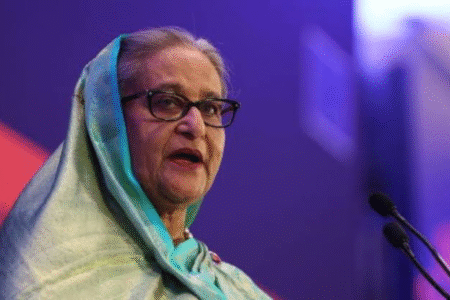
Supriya Sule, senior NCP leader, signalled openness to the government’s delimitation proposal, provided the Lok Sabha sees a uniform 50% rise in seats. The stance could reshape negotiations on the pending Delimitation Bill.
Key takeaways
- NCP willing to back delimitation proposal if seats rise 50%.
- Proposal calls for uniform seat increase from Kashmir to Kanyakumari.
- Government seeks opposition consensus before moving forward.
- Outcome may affect representation balance across states.
What the delimitation proposal entails
The central government has tabled a plan that would expand the Lok Sabha uniformly across every state, from the northern tip of Kashmir to the southern tip of Kanyakumari. Under the plan, each state’s allocation would grow by roughly half, aiming to reflect population changes recorded in the latest census.
NCP’s conditional support
According to statements reported on November 2026, Supriya Sule said the NCP‑SP bloc is ready to back the proposal if the 50% seat hike is applied equally. “The government has made a proposal to the Opposition, under which seats would be increased uniformly from Kashmir to Kanyakumari,” she told reporters.
“We are open to the delimitation proposal if it ensures a fair, 50 per cent rise in Lok Sabha seats across all states,” Sule said.
Historical background of delimitation in India
Delimitation, the process of redrawing the boundaries of electoral constituencies, is mandated by the Constitution of India under Articles 82 and 170. The last major exercise was carried out in 2002‑08 based on the 2001 census, leading to a significant reshuffle of seats and a shift in political power towards states with higher population growth. Since then, the number of Lok Sabha seats has remained frozen at 543, a decision originally intended to encourage family planning. The current proposal seeks to revisit that freeze, arguing that demographic realities have changed dramatically.
Why a uniform 50% increase?
The government argues that a uniform increase maintains the principle of parity among states, preventing any single region from gaining a disproportionate advantage. Critics, however, point out that population growth rates vary widely; some states such as Uttar Pradesh and Bihar have grown faster than others like Kerala or Punjab. The uniform approach therefore raises questions about the balance between numerical equality and proportional representation.
Political calculations behind the stance
The NCP’s openness appears driven by a desire to secure greater representation for Maharashtra, where the party holds a strong base. A 50% increase would add several seats, potentially bolstering the NCP’s influence in the lower house. Analysts also note that the party may be positioning itself as a constructive opposition, hoping to extract policy concessions on issues such as agricultural reforms and regional development.
Implications for Maharashtra
Maharashtra currently commands 48 Lok Sabha seats. A uniform 50% rise would raise that number to 72, creating new constituencies in rapidly urbanising districts like Pune, Nagpur and Nashik. This could reshape the state’s internal political dynamics, giving smaller regional parties and emerging leaders a chance to contest fresh seats. Moreover, the increase could affect the balance of power between the NCP, Shiv Sena and the Bharatiya Janata Party (BJP) within the state.
National impact of the proposal
If the NCP and its allies endorse the plan, the government could move ahead with the Delimitation Bill without facing a major parliamentary hurdle. Conversely, any disagreement could stall the process, delaying the re‑allocation of constituencies. The outcome will also influence the composition of future coalition governments, as a larger Lok Sabha could dilute the weight of any single party or alliance.
Procedural steps and timeline
Officials say the government will circulate the detailed draft to all opposition parties within weeks. A parliamentary debate is expected later this year, after which a vote will determine the bill’s fate. The Delimitation Commission, an independent body, will then undertake the technical work of redrawing boundaries, a process that typically takes 12‑18 months.
Stakeholder reactions
Beyond the NCP, regional parties in the North‑East, South and West have voiced mixed opinions. Some welcome the prospect of increased representation, while others fear that a uniform increase could dilute the influence of smaller states. Civil society groups have called for a transparent, data‑driven approach, urging the commission to publish its methodology publicly.
International perspective
India’s approach to delimitation can be compared with other large democracies. For instance, the United States conducts a decennial redistricting based on census data, but the total number of House seats remains fixed at 435, leading to internal shifts rather than an overall increase. The Indian proposal therefore represents a distinct path, one that could set a precedent for future electoral reforms.
Further reading
For a detailed explanation of the constitutional framework governing delimitation, see the Election Commission of India website.
Next steps and timeline
Stakeholders and voters alike should watch for statements from other regional parties, as their positions will shape the final outcome of the delimitation proposal. The coming weeks will be crucial for gauging the level of consensus and for determining whether the Delimitation Bill can progress smoothly through Parliament.
FAQ
What is the delimitation proposal?
It is a government plan to increase Lok Sabha seats uniformly across all states by about 50%.
Why is Supriya Sule open to the proposal?
She says the NCP will support it if the seat increase is applied equally to every state.
When will the Delimitation Bill be debated?
The government intends to present the draft to opposition parties within weeks and schedule a parliamentary debate later this year.
Will the seat increase affect all states the same way?
Yes, the proposal calls for a uniform 50% rise from Kashmir to Kanyakumari.