Mallikarjun Kharge’s recent remarks about Prime Minister Narendra Modi have set off a fresh round of Kharge remarks controversy. Both BJP and Congress have exchanged barbs, each accusing the other of disrespect.
Key takeaways
- Kharge called Modi’s father a “baap” in a public statement.
- BJP demanded an immediate apology and organised protests in Himachal Pradesh.
- Congress defended Kharge, saying criticism is a political tactic.
- The dispute highlights lingering tensions between the two parties ahead of upcoming elections.
Kharge remarks: What he said
During a press interaction, Congress leader Mallikarjun Kharge referred to the late father of Prime Minister Narendra Modi as a “baap” in a remark that quickly went viral. The comment was framed as a personal anecdote but was seized upon by opponents as an insult.
BJP’s reaction
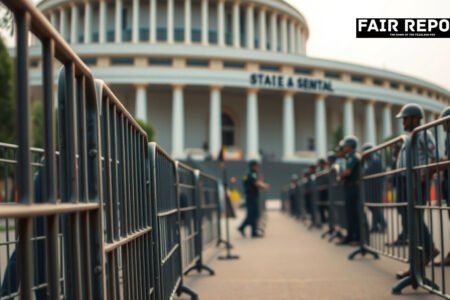
The Bharatiya Janata Party (BJP) labelled the statement disrespectful and demanded a public apology. Party officials in Himachal Pradesh organised statewide protests, chanting slogans and calling for Kharge to retract his words. A BJP spokesperson said,
“Modi won’t go anywhere,”
emphasizing the Prime Minister’s continued relevance.
Congress defends its leader
Congress leaders countered that the criticism was a political ploy to distract from governance issues. They argued that Kharge’s comment was taken out of context and that the BJP was using it to stir emotions ahead of the election cycle.
Comparison of statements
| Party | Statement |
|---|---|
| BJP | Demanded apology; organised protests; quoted “Modi won’t go anywhere”. |
| Congress | Defended Kharge; called BJP’s reaction a political stunt. |
Political fallout
The exchange has revived old debates about personal remarks in Indian politics. Such incidents can influence public sentiment, particularly in swing states like Himachal Pradesh where the BJP has a strong presence.
Historical context of Kharge remarks
Mallikarjun Kharge, a veteran Congress leader and former Union Minister, has a long record of outspoken commentary. Over the past decade, his statements have often sparked media attention, ranging from policy critiques to personal observations about rival politicians. The latest Kharge remarks continue this pattern, highlighting how language can become a flashpoint in a highly polarized environment.
Impact on the upcoming elections
Both parties are gearing up for state assembly elections in several northern states. The Kharge remarks have been woven into campaign narratives, with the BJP portraying the comment as an affront to national dignity, while Congress uses it to question the ruling party’s sensitivity to dissent. Political analysts suggest that such rhetoric can mobilise core supporters but may also alienate undecided voters who prefer issue‑based campaigning.
Regional dynamics in Himachal Pradesh
Himachal Pradesh, a state known for its swing‑vote electorate, has seen heightened activity since the Kharge remarks. Local BJP units have organised rallies, while Congress workers have staged counter‑rallies defending free speech. The state’s media outlets have reported increased voter engagement, with many citizens expressing both fatigue over political mud‑slinging and curiosity about how the controversy will shape policy discussions.
National media coverage
National newspapers and television channels have given extensive coverage to the Kharge remarks, often featuring panel debates that juxtapose the statements with broader questions about political decorum. An article in The Hindu highlighted the potential ramifications for party image management.
What comes next
Both parties are likely to keep the issue alive in rallies and media briefings. Voters should watch for any formal apology from Kharge or further protest actions from the BJP, as these could influence campaign narratives. In the weeks ahead, the Kharge remarks may be referenced in parliamentary debates, social media trends, and grassroots canvassing, making it a barometer for how personal attacks intersect with policy discourse.
Long‑term implications for political discourse
The Kharge remarks episode underscores a broader shift in Indian politics where personal anecdotes are weaponised for electoral gain. If such tactics become commonplace, they could erode the quality of public debate, prompting parties to focus more on sensationalism than substantive policy proposals. Observers warn that sustained reliance on personal attacks may diminish public trust in democratic institutions.
FAQ
What exactly did Mallikarjun Kharge say about PM Modi's father?
Kharge referred to the late father of Prime Minister Narendra Modi as a "baap" during a press interaction, a term that was interpreted by opponents as disrespectful.
Why did the BJP demand an apology?
The BJP viewed the comment as a personal insult to the Prime Minister's family and said an apology was necessary to maintain decorum.
Has Congress responded with any counter‑statement?
Congress defended Kharge, saying the BJP was politicising the remark and that it was taken out of context.
Are there any protests planned?
BJP members in Himachal Pradesh have already staged statewide protests demanding an apology.
Will this affect upcoming elections?
Both parties may use the controversy in their campaign rhetoric, but its direct impact on votes remains uncertain.