High political friction unfolded outside the state legislature on October 27 as opposition lawmakers staged an intense demonstration. The Punjab assembly protest escalated rapidly following allegations that Congress legislators were deliberately barred from entering the legislative complex.
Key Takeaways
- Congress MLAs were stopped from entering the Punjab legislative assembly on October 27.
- Opposition members accused officials of enforcing an unlawful “entry ban” against elected representatives.
- A physical and verbal confrontation erupted between Congress legislators and Aam Aadmi Party (AAP) members.
- The incident marks another sharp escalation in the political rivalry between the ruling government and the opposition in Punjab.
Opposition Lawmakers Barred at the Gates
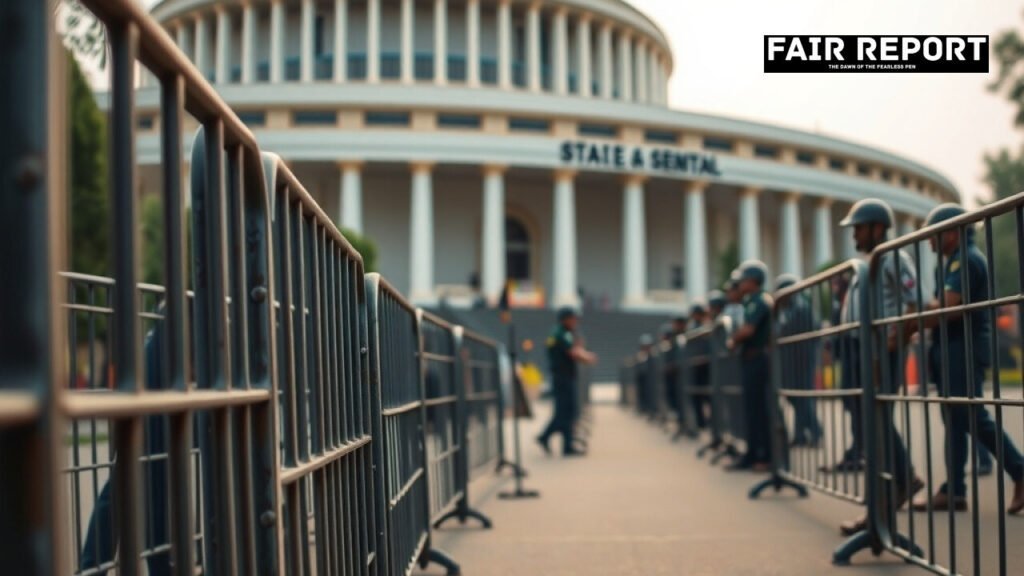
The confrontation began early in the day when several elected members belonging to the Indian National Congress attempted to access the assembly grounds. Security personnel stationed at the premises restricted their movement, preventing them from stepping past the primary security perimeter.
Infuriated by the sudden lockdown, the legislators initiated a spot demonstration directly outside the complex. Members raised slogans against the state administration, terming the restriction an arbitrary attempt to silence opposition voices inside the House. The unexpected blockade quickly brought traffic and administrative entry points around the building to an abrupt standstill.
Congress and AAP Members Clash at Legislative Complex
The situation deteriorated further when legislators from the ruling Aam Aadmi Party (AAP) arrived at the scene. Disagreements over the restriction flared into heated verbal exchanges between lawmakers of both political parties, culminating in chaotic scuffles along the security barricades.
During this fiery Punjab assembly protest, Congress leaders charged the treasury benches with running the legislature without democratic norms. AAP members rejected the accusations on the spot, arguing that the assembly’s security guidelines and protocol must be maintained by everyone regardless of party affiliation. Security marshals and police teams intervened to keep the rival groups separated and prevent wider physical brawls.
| Political Party | Legislative Status | Core Position on the Standoff |
|---|---|---|
| Indian National Congress | Main Opposition | Protested the blockade, claiming an unauthorized “entry ban” against sitting MLAs. |
| Aam Aadmi Party (AAP) | Ruling Party | Defended procedural and security protocols at the assembly gates. |
Dispute Over Legislative Access and Rights
Denying legislators entry into an active parliamentary or legislative campus remains a highly sensitive constitutional matter in Indian politics. Lawmakers have designated constitutional privileges that facilitate access to their official legislative offices and committee rooms.
Congress representatives argued that the administration intentionally used security mechanisms to obstruct opposition participation. Because the confrontation took place right at the threshold of the House, opposition figures indicated that preventing elected members from entering constitutes a breach of democratic convention.
Implications for Punjab Assembly Proceedings
The fallout from the latest Punjab assembly protest is set to ripple through forthcoming house sittings. Legislative business often slows considerably when opposition benches stage coordinated walkouts, boycotts, or gate protests over protocol violations.
With both political camps digging in their heels, the speaker of the assembly and legislative secretariats face scrutiny regarding administrative directives at the entrance. Citizens tracking state governance can anticipate heated debates, possible privilege notices, and formal complaints lodged with the presiding officer in the days ahead.
Punjab assembly protest: A Timeline of Events
Below is a concise chronology that captures the key moments of the October 27 incident:
- 08:30 IST – Congress MLAs arrive at the assembly gate and are stopped by security staff.
- 09:00 IST – Lawmakers begin a sit‑in protest, chanting slogans and unfurling placards demanding entry.
- 09:45 IST – AAP legislators reach the scene; verbal altercations quickly turn physical.
- 10:15 IST – Police deploy additional forces, forming a barrier to separate the two parties.
- 11:00 IST – The assembly speaker issues a statement urging calm and promising an internal review.
For a detailed news report, see India Today’s coverage of the protest.
Reactions from Civil Society and Media
Local journalists and civil‑rights groups quickly weighed in on the incident. The Punjab Press Club released a statement condemning “any attempt to curb the democratic rights of elected representatives.” Meanwhile, several NGOs highlighted the need for transparent security protocols that do not become tools for political intimidation.
Legal Perspectives
Legal experts have pointed out that the Constitution of India guarantees certain privileges to legislators, including unhindered access to the legislative premises for the performance of official duties. However, they also note that “reasonable security measures” are permissible, provided they are applied uniformly and not used to discriminate against a particular party. The matter may soon be taken up by the Punjab High Court, where petitions filed by opposition lawyers are expected to argue that the “entry ban” violated Article 194 of the Constitution.
Potential Political Fallout
Analysts predict that the protest could have several downstream effects:
- Increased pressure on the AAP government to clarify its security policies.
- Possible escalation of parliamentary tactics, such as mass walkouts or adjournment motions.
- Heightened media scrutiny, which may influence public opinion ahead of the upcoming state elections.
Overall, the Punjab assembly protest underscores the fragile balance between maintaining order in legislative complexes and safeguarding the democratic rights of opposition lawmakers.
Frequently Asked Questions
Why did Congress MLAs protest at the Punjab assembly?
Congress MLAs staged a protest after they were stopped and barred from entering the Punjab legislative assembly premises on October 27.
Did Congress MLAs clash with AAP members?
Yes, lawmakers from both the Congress and the ruling AAP clashed outside the assembly gates during the demonstration.
What did the opposition allege regarding entry?
Opposition leaders alleged that an unconstitutional entry ban was deliberately placed to stop elected representatives from entering the legislative complex.